Why We Reach for Our Phones When Tasks Feel Hard to Start
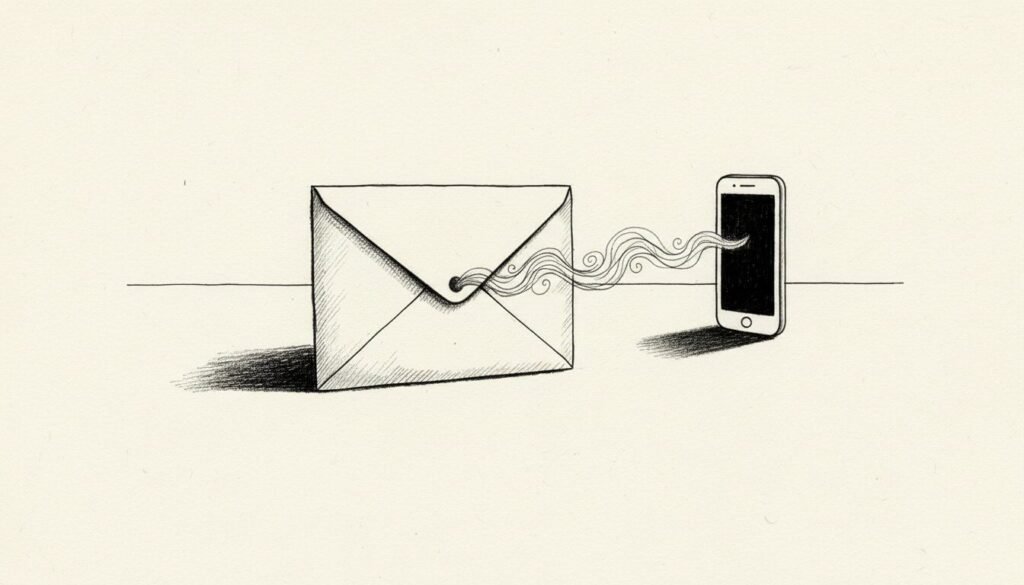
The email sits there, read but unanswered. You know what you want to say. You could type it in three minutes. Instead, you open Instagram. Then check the weather. Then look at your phone’s battery percentage for no reason.
This pattern has a name, and it’s not laziness. Understanding why screens become escape routes at specific moments can change how you think about digital habits entirely.
The Phone Isn’t the Problem. The Moment Is.
Most advice about phone overuse targets the wrong thing. It focuses on consumption: scrolling, watching, mindless browsing. Delete apps, set timers, turn on grayscale.
But for many people, the deepest pull toward screens has nothing to do with entertainment.
It happens at the exact second a task requires genuine mental effort. A message that needs a thoughtful reply. A work email requiring careful wording. Any situation where getting it wrong feels possible.
The phone doesn’t distract from nothing. It distracts from something specific that feels hard to start.
Why Starting Feels Heavy
There’s a psychological concept called task initiation, and it’s separate from task completion. Some things aren’t hard to do once you begin. They’re just hard to begin.
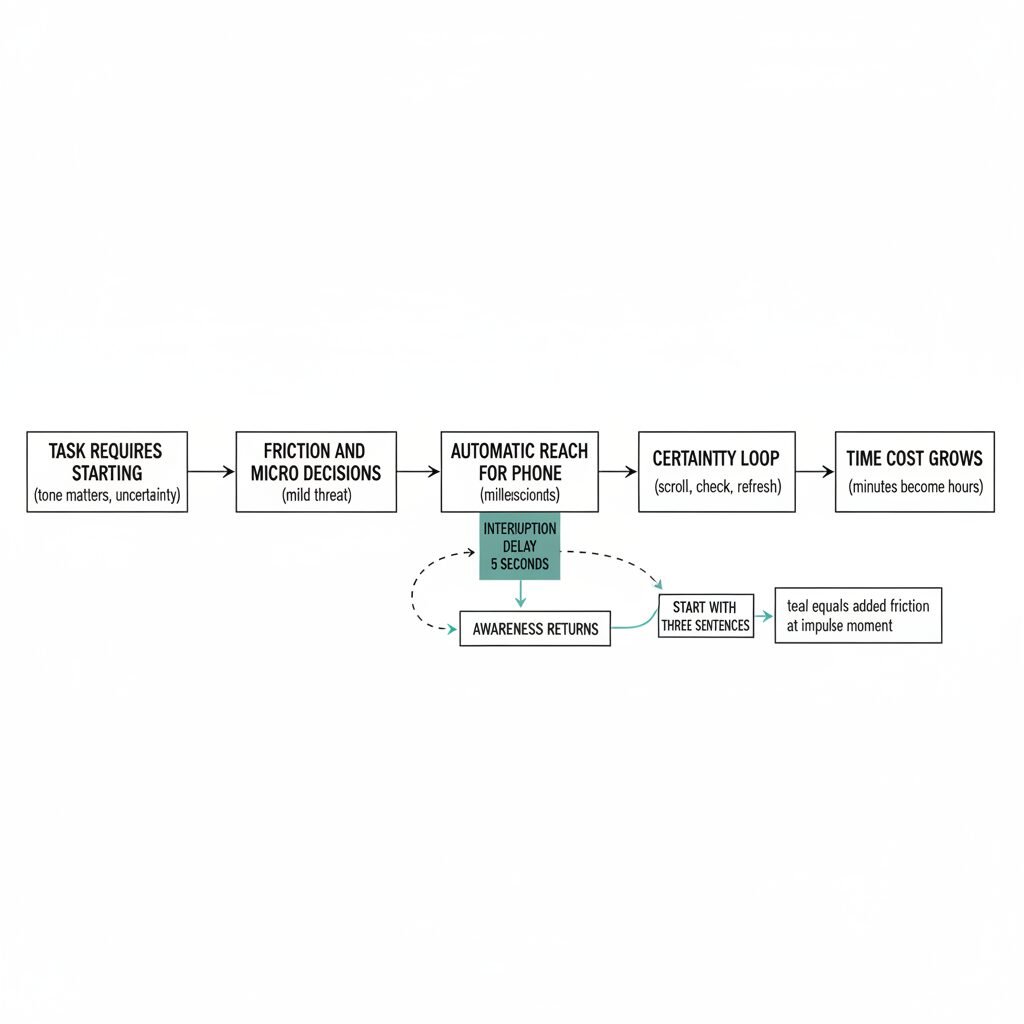
The brain treats uncertainty as a mild threat. Composing a message where tone matters, where you might be misunderstood, where you need to think before writing – these involve micro-decisions that create friction.
Friction triggers avoidance. And avoidance needs somewhere to go.
Your phone offers a perfect escape route because it provides instant certainty. Scrolling requires zero decisions. Checking notifications feels productive. Refreshing a feed produces immediate, predictable results.
The phone becomes attractive not because of what it offers, but because of what it lets you postpone.
The Delay Creates More Screen Time Than the Task Ever Would
Here’s the cruel math of avoidance: the thing being avoided usually takes five minutes. The avoidance can last hours.
Someone puts off a three-paragraph reply. Over the next day, they check their phone twenty extra times, partly to see if the situation resolved itself, partly because the unfinished task creates low-grade anxiety that makes distraction more appealing.
Each check adds another minute or two. The cumulative time spent avoiding far exceeds the time the task required.
And the task still needs doing.
Most People Think This Is a Willpower Problem
It’s not.
Willpower assumes a fair fight between two equal options. But the decision to start something effortful versus escape to something effortless doesn’t happen in the rational, weighing-options part of the brain.
It happens automatically, in milliseconds.
The phone is already in your hand before you’ve consciously chosen to avoid anything. The habit loop completes faster than intention can intervene.
This is why “just put your phone down” advice feels useless to people who struggle with it. The behavior happens before the advice applies.
Reducing Friction at the Point of Initiation
If the problem isn’t consumption but avoidance, the solution shifts too. Instead of removing apps or blocking content, the focus becomes: what makes starting easier?
Some approaches that change the initiation moment:
– Shrink the task mentally. “Write three sentences” feels lighter than “reply to this email.” The full reply might happen anyway, but the starting threshold drops.
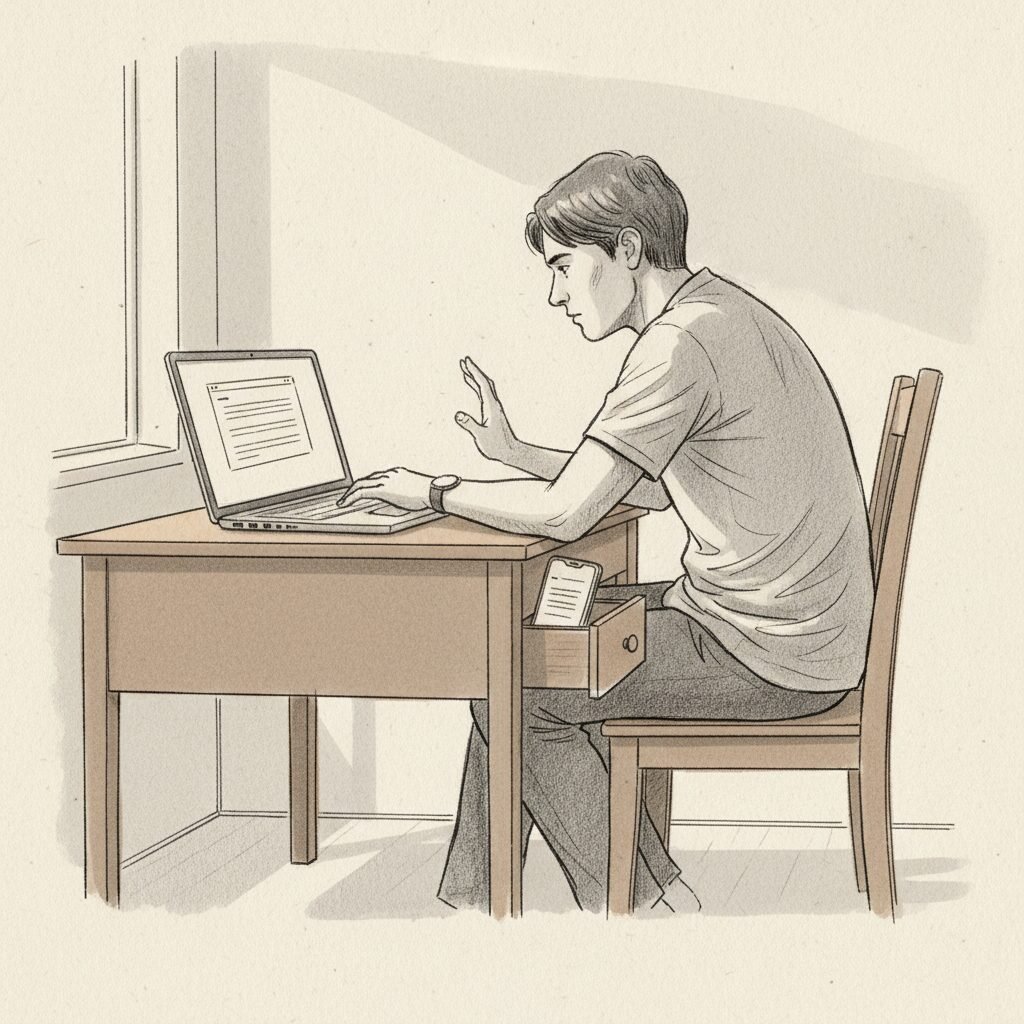
– Remove the phone from the physical space during initiation. Avoidance needs an escape route. No phone in the room means the brain’s autopilot can’t complete its usual pattern.
– Batch effortful responses into a single window. Knowing you’ll handle all hard replies at 2pm removes the recurring decision points throughout the day.
But here’s the honest part: knowing these strategies doesn’t guarantee using them. The same automatic behavior that bypasses willpower also bypasses good intentions.
When Internal Strategies Need External Support
For people whose avoidance patterns are deeply automatic, environmental changes often work better than mental strategies alone.
This is where friction-based tools become relevant. Browser extensions like MonkeyBlocker add delays at the moment of impulse, creating space between the urge to escape and the escape itself. The Impulse Check feature introduces a brief pause before distracting sites load, giving the conscious brain time to catch up with what the habit was about to do automatically.
The logic isn’t restriction. It’s interruption. A few seconds of delay can be enough for someone to remember that the email they’re avoiding would take two minutes, while the scrolling session they’re about to start will take forty.
MonkeyBlocker’s approach works because it targets the speed of automatic behavior rather than trying to override it with motivation. It’s a support tool, not a cure. But for patterns that happen faster than conscious thought, slowing the pattern down can make the difference.
Reframing What Digital Minimalism Means
The standard version of digital minimalism asks: how do I use my phone less?
A more useful question might be: how do I stop my phone from becoming a hiding place?
These sound similar but lead to different solutions. The first approach removes content. The second approach changes when and why you reach for the device.
Someone could delete every social app and still use their phone for avoidance. Checking email repeatedly, reading old messages, adjusting settings, browsing the app store. The specific destination matters less than the function it serves.
Minimalism that works addresses the function, not just the apps.
A Different Relationship With Difficulty
Screens didn’t create avoidance. Humans have always found ways to postpone uncomfortable tasks. Before phones, there were newspapers, television, unnecessary errands, conversations with whoever happened to be nearby.
What phones changed is the availability. An escape route now exists in every pocket, ready in every moment.
The real work isn’t eliminating the escape route entirely. That’s not realistic. The work is noticing the specific moments when difficult tasks trigger the urge to flee, and building small systems that make starting slightly easier than escaping.
Not every time. Just enough to shift the pattern.