Why Tomorrow Never Comes: The Psychology of Starting and Procrastination
The Lie of Tomorrow
You’ve told yourself you’ll start tomorrow at least a hundred times. Maybe a thousand. Tomorrow you’ll wake up early. Tomorrow you’ll finally begin that project. Tomorrow you’ll stop wasting hours on your phone.
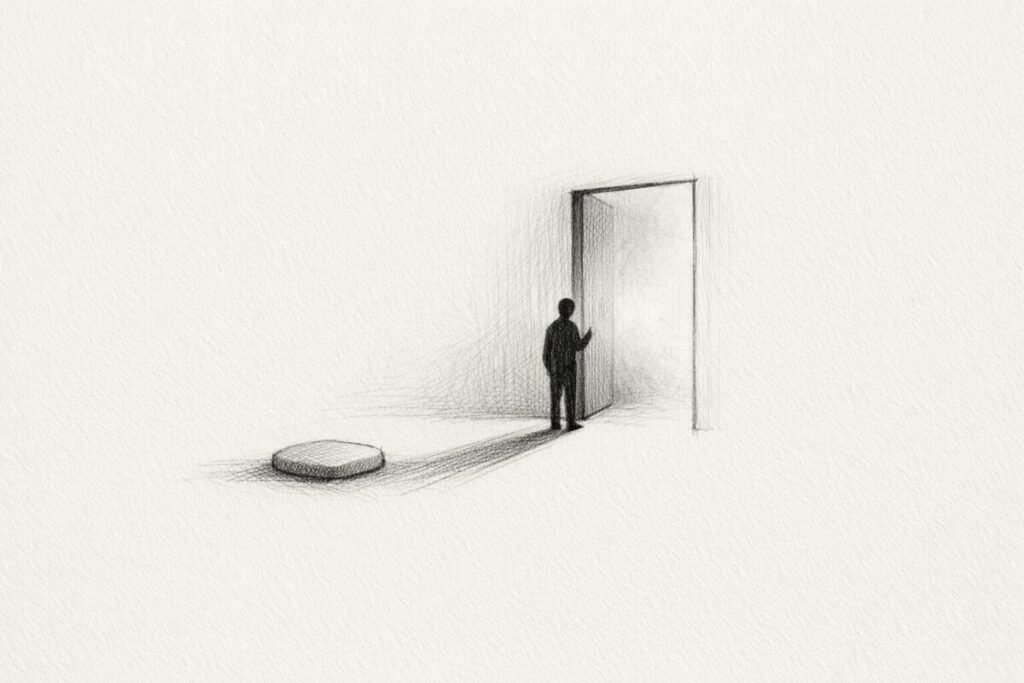
Tomorrow never comes. Not because you lack willpower or discipline, but because tomorrow is a psychological escape hatch. It lets you feel the relief of making a decision without actually doing anything. And that relief is precisely why you keep using it.
Understanding why “tomorrow” fails so consistently reveals something useful about how to actually start.
Tomorrow Is a Trick Your Brain Plays on You
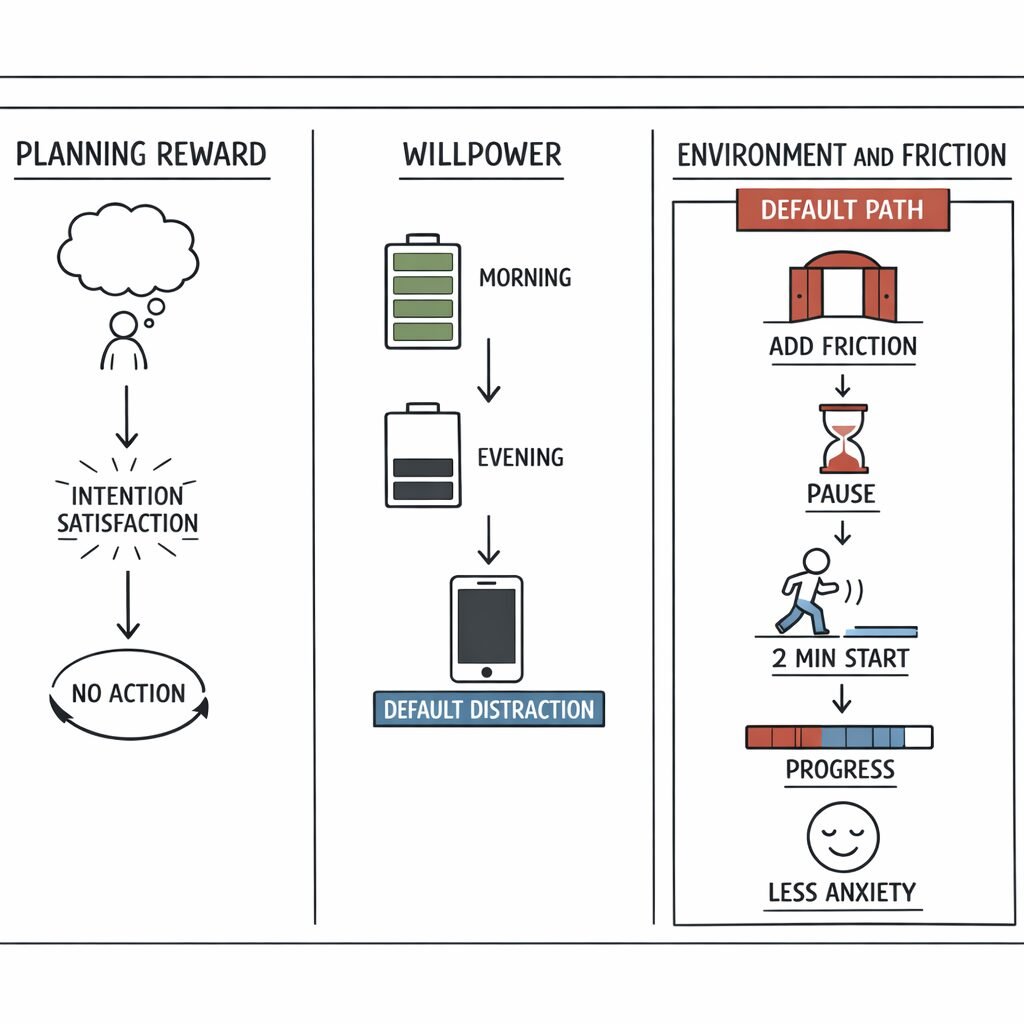
When you decide to start something tomorrow, your brain registers it almost like you’ve already done it. Researchers call this “intention satisfaction.” The act of planning creates a small hit of accomplishment, which temporarily reduces the anxiety of not doing the thing.
The more vivid and detailed your plan for tomorrow, the less likely you are to follow through. That sounds backwards, but it makes sense once you see the mechanism. Detailed planning feels productive. Your brain gets its reward. Then it moves on.
This is why the person who thinks least about starting often starts fastest. They haven’t given themselves the fake satisfaction of imagining it done.
Identity Runs Deeper Than Decisions
Most people think behavior change works like this: decide to act differently, then act differently. But that’s fighting your own psychology.
Your brain takes shortcuts. It looks at who you are, then selects behaviors that match. If your self-image includes “someone who procrastinates,” your brain will generate procrastination-consistent choices automatically. You won’t even notice. It just feels like what you want to do.
You don’t act your way into a new identity. You claim the identity first, and your actions follow.
This isn’t positive thinking. It’s recognizing that the label you give yourself becomes a filter for all your decisions. Someone who identifies as “a person who shows up” will feel friction when they consider skipping something. The identity creates its own gravity.
Why Willpower Always Loses
Here’s what most advice gets wrong: it assumes you can muscle through with enough determination. Just try harder. Want it more. Be stronger.
That framing is exhausting and mostly useless. Willpower is a diminishing resource. It gets depleted by decisions, stress, hunger, fatigue. By evening, most people have almost none left. This is exactly when the phone comes out and the scrolling begins.
The people who appear disciplined usually aren’t relying on willpower at all. They’ve arranged their environment so the desired behavior is the default and the undesired behavior requires effort.
Consider someone who never eats junk food. Are they constantly resisting temptation? Usually not. They just don’t keep it in the house. The decision was made once, at the grocery store. No daily willpower required.
Environment Beats Intention
Your environment is constantly nudging you. Every object in your space, every app on your phone, every notification sound is a tiny prompt pushing you toward some behavior.
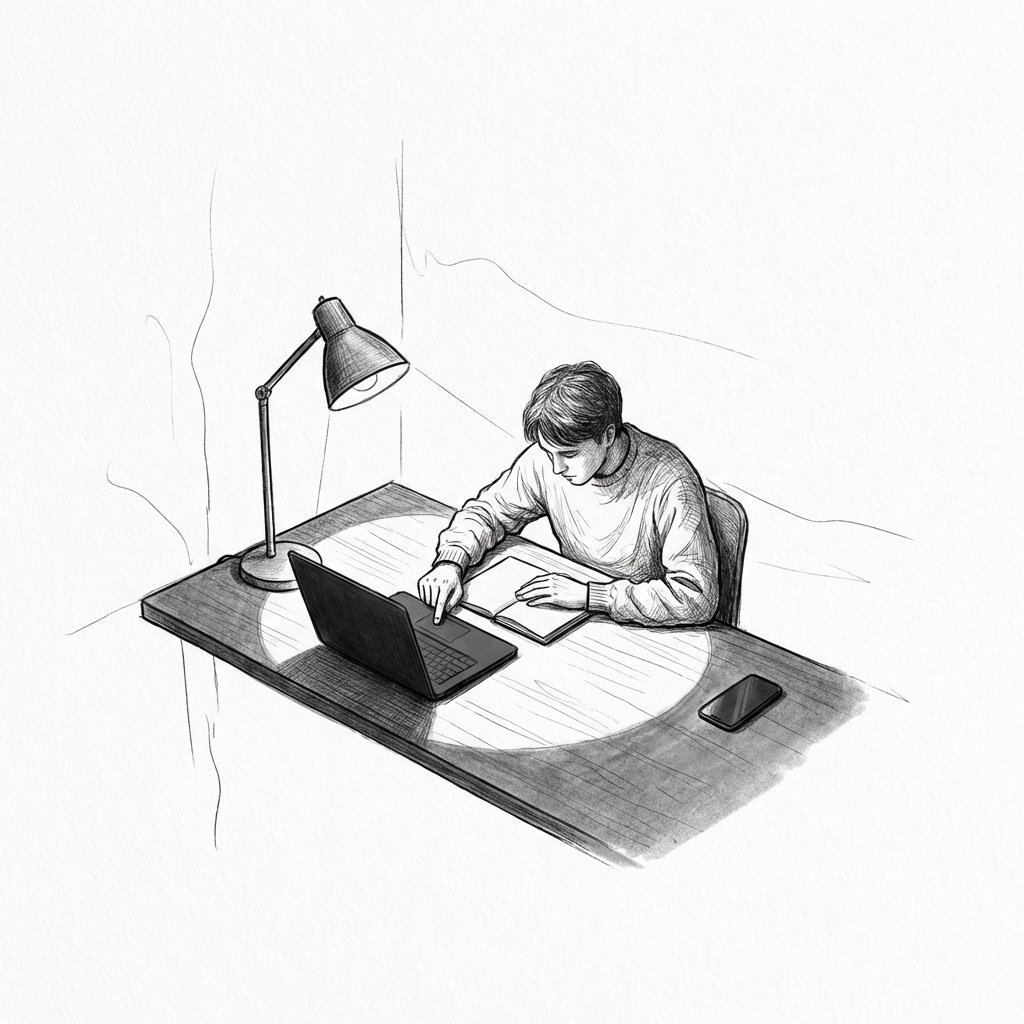
Digital environments are especially potent. Social media apps are engineered by teams of behavioral scientists to capture and hold attention. You’re not fighting your own weakness when you struggle to put down your phone. You’re fighting billions of dollars of optimization designed to make that phone irresistible.
This is why friction-based tools work better than motivation-based approaches. Browser extensions like MonkeyBlocker apply a simple principle: slow down the automatic behavior enough for conscious thought to catch up. The Impulse Check feature adds a brief delay before distracting sites load. Those few seconds don’t sound like much, but they’re often enough for the thinking part of your brain to ask, “Do I actually want this?” The Scroll Stopper creates natural pause points in infinite feeds, turning passive scrolling into a series of small decisions. Each decision is a chance to stop.
These tools won’t fix everything. But they address something willpower cannot: the sheer speed at which digital habits bypass conscious choice.
The Smallest Action Breaks the Spell
There’s a reason “just start” is clichéd advice that actually works. Beginning something, even badly, changes your relationship to it.
Before you start, the task exists as an abstract weight. It looms. Your brain imagines the worst version of doing it. After you start, even for two minutes, the task becomes concrete. You’ve touched it. It’s no longer a monster in the dark.
Two minutes of actual work beats two hours of planning to work.
The absurdly small action is often the right one. Don’t plan to write for an hour. Open the document. Don’t commit to a full workout. Put on your shoes. The continuation is almost always easier than the initiation.
Accountability Changes the Math
Left alone, your brain negotiates with itself. It generates excellent reasons to delay. It promises sincerely that tomorrow will be different. These negotiations happen silently, with no witnesses.
Adding another person changes the equation. When someone else knows what you said you’d do, the cost of not doing it includes their knowledge of your failure. This sounds harsh, but it’s one of the most reliable behavior change mechanisms available.
You don’t need a formal accountability partner. Even telling a friend “I’m going to do X by Friday” increases your odds. The commitment becomes public. It has weight.
Progress Replaces the Need for Escape
That pull toward Netflix, social media, video games: it’s often not about the content itself. It’s about escaping the discomfort of not doing the thing you know you should do.
Procrastination creates a low-grade anxiety. Distraction numbs that anxiety temporarily. The cycle feeds itself.
But here’s what breaks it: actually making progress. Even small progress. When you move something forward, the anxiety dissolves at the source. You don’t need to numb it because it’s gone.
The feeling of having done something meaningful is more satisfying than any distraction. The problem is, distractions are immediate and easy, while meaningful work feels hard to start.
The Only Moment You Have
Tomorrow you’ll be tired. Tomorrow you’ll have new excuses. Tomorrow your brain will generate fresh reasons to wait until the day after.
The version of you that exists right now, reading this, is the only version that can actually do anything. Future you is a fiction. A story you tell yourself to avoid the discomfort of starting.
There’s something almost peaceful in accepting this. You stop negotiating with time. You stop making deals with a tomorrow that never arrives. What remains is just this moment, and what you choose to do with it.