Break the Procrastination Habit by Changing Your Stress Response
You’ve promised yourself a hundred times that today would be different. You’d sit down, open the project, and just get it done. Instead, you’re fifteen minutes into scrolling through videos you don’t even care about, wondering why you can’t seem to do the thing you genuinely want to do.
The frustrating part isn’t the distraction itself. It’s the mystery of it. Why does this keep happening when you know better?
Here’s what might change how you see this: procrastination isn’t a character flaw. It’s a habit. And habits follow rules that science understands pretty well.
The Real Trigger Isn’t What You Think
Most people assume procrastination is about the task. The report is boring. The phone call is intimidating. The project is overwhelming.
But research points somewhere else entirely.
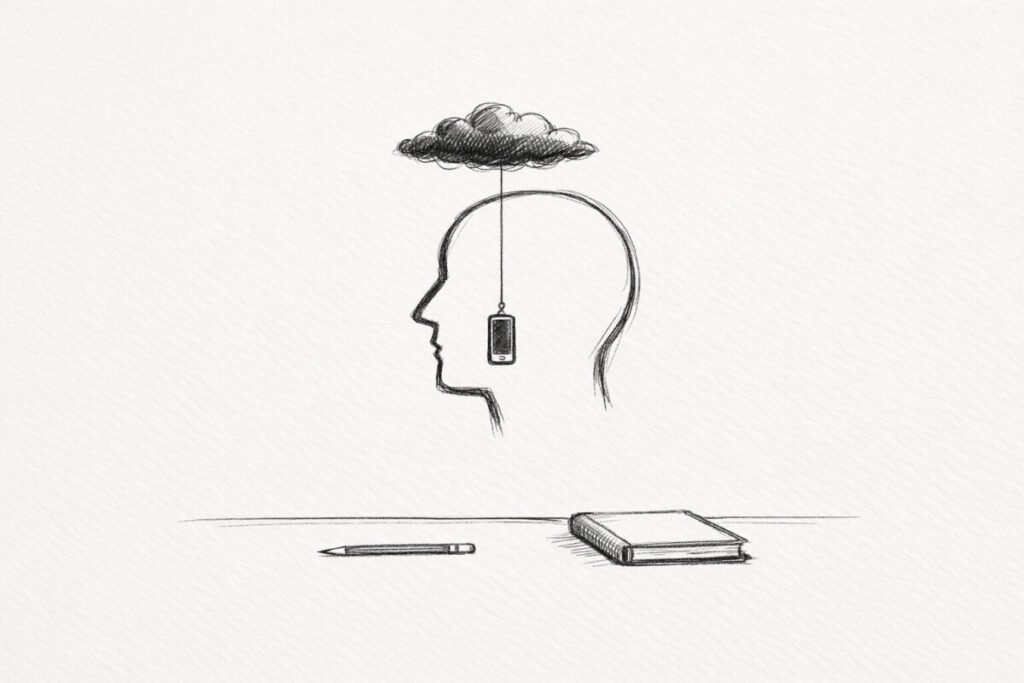
Procrastination is stress relief. Not relief from the task, but relief from whatever stress you’re already carrying when you sit down to work.
Think about it. You arrive at your desk with worries trailing behind you. Maybe it’s money stuff. Maybe a relationship is rocky. Maybe you’re just tired and anxious for reasons you can’t even name. Your brain is already managing a load.
Then you ask it to do something hard.
Your brain does a quick calculation and says: absolutely not. We’re too stressed for that. Let’s find something easy instead.
The task doesn’t cause the avoidance. The stress you brought with you does.
The Habit Loop Behind Every Delay
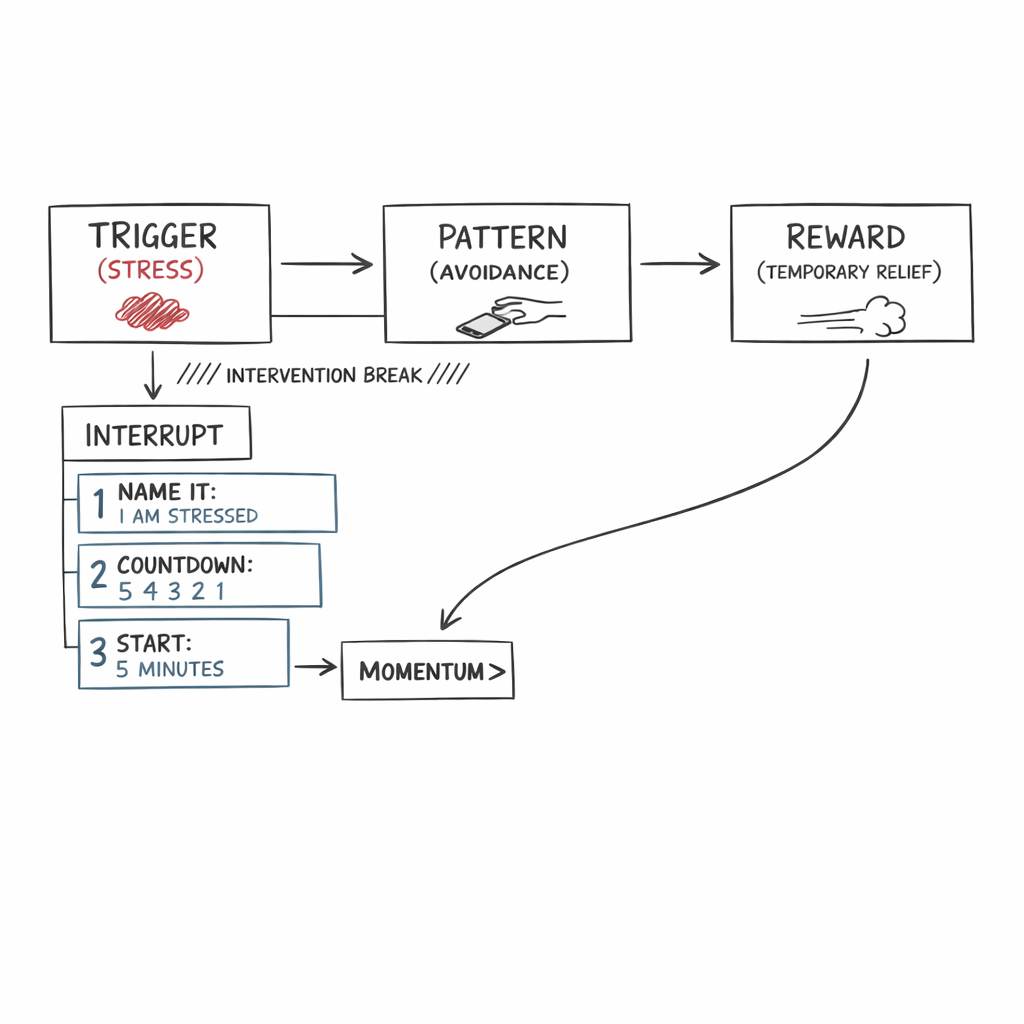
Every habit has three parts: a trigger, a pattern, and a reward.
For procrastination, it looks like this:
Trigger: Stress (often unrelated to the task)
Pattern: Avoiding the work by doing something easier
Reward: Temporary relief from that stressed feeling
The reward is real, which is why the habit sticks. Checking your phone or watching random clips genuinely feels better for a moment. Your brain learned that this pattern works for reducing discomfort.
Of course, it creates new discomfort later. Guilt, falling behind, the stress of cramming. But habits don’t think long-term. They just repeat what worked before.
Why Eliminating Stress Won’t Work
The obvious solution seems like removing stress from your life.
Good luck with that.
Stress isn’t going anywhere. There will always be health concerns, financial pressures, relationship friction, uncertainty about the future. Waiting until you feel calm and ready means waiting forever.
The only reliable way to break a habit isn’t to eliminate the trigger. It’s to change what happens after the trigger fires.
You can’t control when stress shows up. You can control what you do when it does.
Interrupt the Pattern
Here’s a technique that works because it targets the right part of the loop.
When you notice yourself avoiding, whether that’s opening a new browser tab or reaching for your phone, pause and name what’s happening.
Say to yourself: “I must be stressed about something.”
Not as self-criticism. Just as recognition. You’re acknowledging the trigger instead of letting it run the show invisibly.
Then count backward from five. 5, 4, 3, 2, 1.
This sounds almost too simple. But the counting does something specific. It interrupts the automatic pattern and activates your prefrontal cortex, the part of your brain that makes deliberate choices instead of habitual ones.
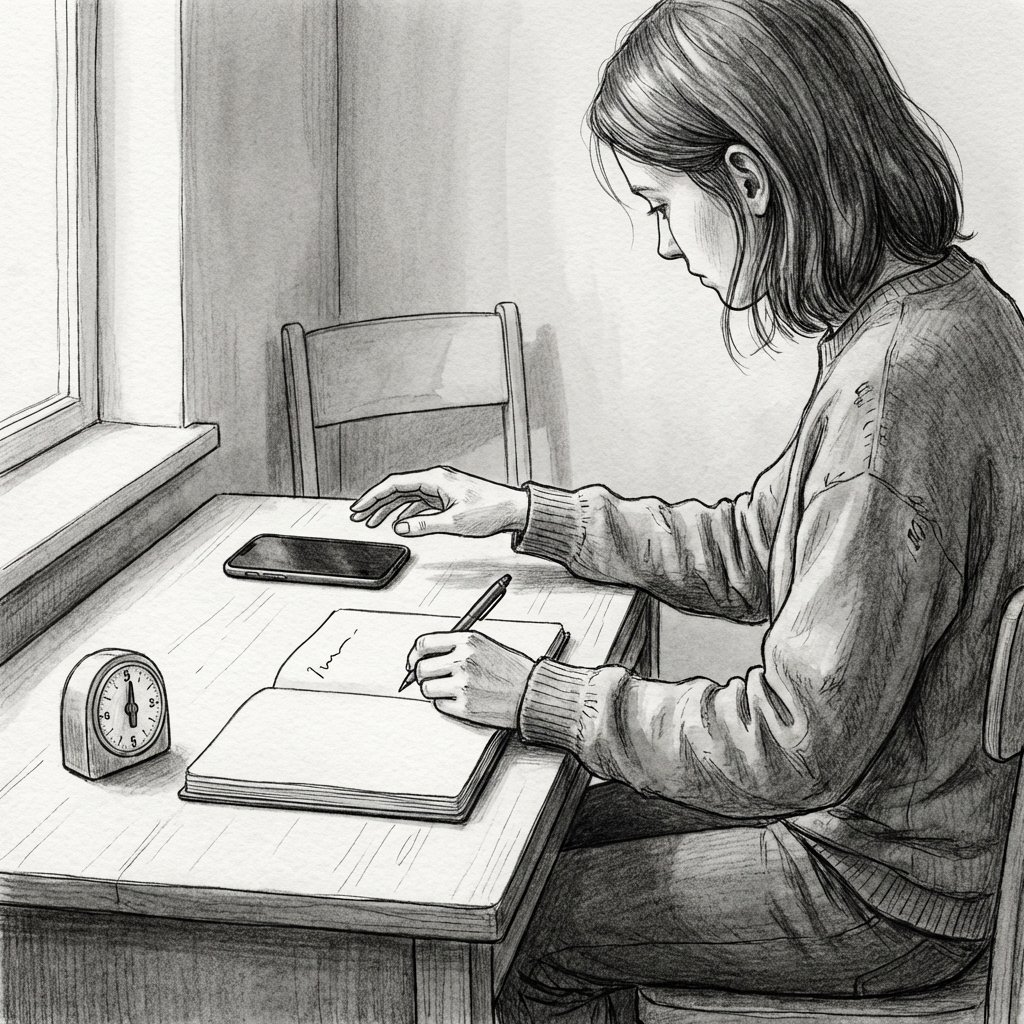
After the count, commit to working for just five minutes.
Not an hour. Not until it’s done. Five minutes.
Why Five Minutes Changes Everything
Your problem isn’t an inability to work. It’s the habit of not starting.
Once you start, something interesting happens. Research suggests that about 80% of people who begin a task will keep going past the initial resistance.
The friction is almost entirely at the beginning. The first five minutes are where the habit lives. Push through that window, and momentum tends to take over.
Five minutes is also small enough that your stressed brain can’t argue with it. An hour of focused work sounds impossible when you’re overwhelmed. Five minutes sounds survivable. Your brain might just let you try it.
When Digital Escapes Are Part of the Pattern
For many people, the avoidance pattern runs straight through a browser or phone. The escape route is always one click away, and the habit moves faster than conscious thought.
This is where environment design matters more than willpower. If the escape hatch is instant and effortless, your stressed brain will take it before you even realize what’s happening.
To stop mindless scrolling and impulsive site visits, friction-based tools can help interrupt the automatic response. Browser extensions like MonkeyBlocker work by inserting brief delays before distracting sites load, a feature called Impulse Check. That pause of a few seconds gives your prefrontal cortex time to catch up with what your habit was about to do. It’s not blocking the site. It’s just slowing down the decision enough for you to make it consciously.
Similarly, tools like MonkeyBlocker’s Scroll Stopper create natural breaking points in infinite feeds, turning the default of endless scrolling into moments where you have to choose to continue. The goal isn’t restriction but awareness, targeting the speed at which digital habits bypass your intentions.
You’re Not Broken
The language matters here.
Saying “I’m a procrastinator” turns avoidance into an identity. Something fixed. Something that defines you.
Saying “I have a habit of procrastinating” turns it into a behavior. Something that formed for understandable reasons. Something that follows predictable patterns. Something that can change.
You developed this habit because it solved a problem: stress felt bad, and avoidance felt better. Your brain was doing its job. It just found a solution with long-term costs.
Now you can teach it a different response. Acknowledge the stress. Count backward. Work for five minutes. Let momentum do the rest.
The stress will still be there. But you’ll have a new pattern to meet it with.