How to Redirect the Scroll Reflex With the 10-Minute Swap Method
The Scroll Reflex and the 10-Minute Redirect
You know the moment. A task takes longer than expected. A notification doesn’t arrive. Someone puts you on hold. Within seconds, your thumb has already opened an app you didn’t consciously choose.
Most people assume this is a willpower problem. It isn’t. The behavior is faster than conscious thought. And that’s exactly why swapping scrolling for something else works better than trying to resist the urge entirely.
What follows isn’t about becoming a learning machine or optimizing every spare second. It’s about something simpler: filling the gaps differently and noticing what changes when you do.
Why the Swap Works Better Than the Block
The standard advice for breaking digital habits is some version of “just stop.” Delete the apps. Use willpower. Think about what you’re missing.
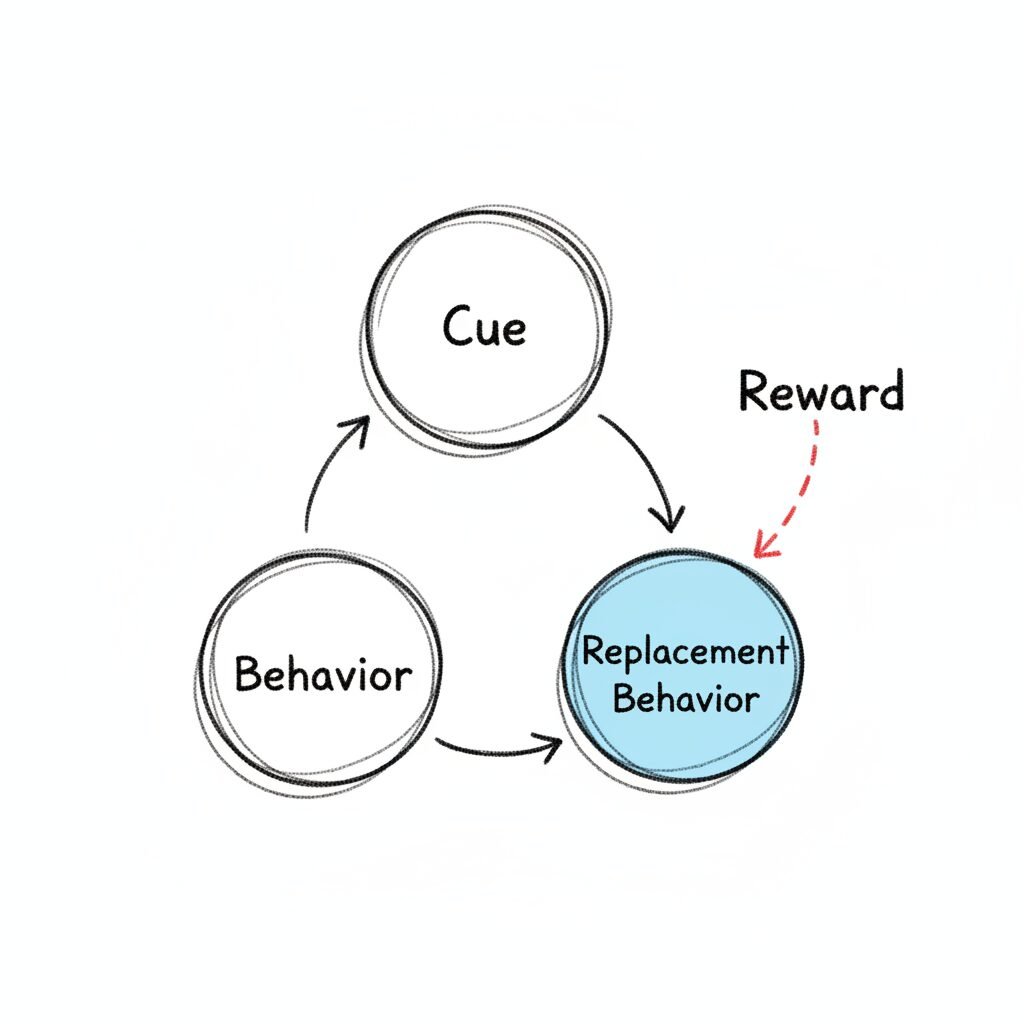
But this ignores how habits actually function. A habit is a loop: cue, behavior, reward. The cue for social media scrolling is often any moment of friction or boredom. Deleting the app addresses the behavior, but the cue remains. And without a replacement behavior, the cue keeps firing into a void.
Substitution works because it respects the loop instead of fighting it. The boredom or waiting still triggers something – just something different. A language app. A saved article. A short video that teaches rather than loops.
The goal isn’t to fill every moment with productivity. It’s to redirect the reflex somewhere less corrosive.
What Actually Happens in 30 Days
People who’ve tried this report a predictable arc. The first week is uncomfortable. The hand reaches for the phone, finds something unfamiliar, and the brain protests. There’s a genuine withdrawal effect – not metaphorical, but neurological. The dopamine pattern has been interrupted.
By week two, something shifts. The learning app starts to feel normal. Not exciting, but neutral. The friction decreases.
By week three and four, the compound effects become visible:
– Actual knowledge accumulates. Basic phrases in a new language. Understanding of a concept you’d avoided. A book finished in fragments.
– Sleep improves. The late-night scroll session disappears because the replacement isn’t as compelling in bed.
– Conversations get easier. There’s something to talk about beyond reactions to content someone else made.
None of this is dramatic. It’s just different. And different, after years of the same loop, can feel significant.
The Part Most People Underestimate
Here’s what the standard “replace scrolling with learning” advice misses: learning can become its own mindless behavior.
Duolingo streaks. Completion percentages. Achievement badges. These are designed to trigger the same reward pathways as social media. If you’re not careful, you’ve just traded one dopamine loop for another.
The goal isn’t to feel productive. It’s to feel less scattered.
The test for whether a swap is working isn’t “am I learning?” It’s “do I feel more present afterward, or more depleted?”
If your learning app leaves you craving the next hit, that’s information. The loop is still running. You’ve just changed the content inside it.
The Case for Doing Nothing
There’s a counterintuitive finding that keeps appearing in attention research: boredom is productive. Not the anxious, phone-reaching boredom. The settled, staring-out-the-window kind.
When the brain isn’t processing new input, it does something important. It sorts. It connects. It generates ideas that wouldn’t emerge under constant stimulation.
This suggests the ideal isn’t “replace scrolling with learning.” It’s “replace scrolling with learning sometimes, and with nothing other times.”
The nothing is harder. Learning gives you something to show for the time. Boredom gives you nothing visible. But the sorting happens anyway.
Making the Redirect Stick
The mechanics matter. A vague intention to “learn instead of scroll” collapses under the first moment of genuine boredom. Here’s what makes substitution more likely to hold:
Remove the path to the old behavior. Not just app deletion, but making the return route inconvenient. Log out of web versions. Change passwords to something unmemorable.
For people who want to use social media intentionally but find themselves sucked into algorithmic rabbit holes, browser extensions like MonkeyBlocker add friction at the moment of impulse. The Impulse Check feature introduces a brief pause before sites load – a few seconds where the conscious mind can catch up to the automatic behavior. Its Social Cleaner hides recommended content like Shorts and Reels while keeping posts from accounts you actually follow. These friction-based tools work because they target the speed at which digital habits bypass conscious thought, not because they require more willpower.
Pre-load the alternatives. The replacement needs to be as accessible as the original. Pocket app with saved articles. Language app on the home screen. Kindle with a book already started.
Keep sessions short. Ten minutes maximum. Longer sessions turn learning into a chore. The point is to fit the same gap that scrolling used to fill, not to create a new obligation.
Expect slippage. You will open Instagram again. The question isn’t whether you slip, but what happens after. A single scroll session doesn’t reset progress. The pattern changes over weeks, not days.
What You’re Actually Gaining
The tangible outputs – the Spanish phrases, the book chapters, the new skill – are real but not the main point.
The larger shift is in your relationship with gaps. The moments between things. The waiting. The friction.
Before, these were threats to be numbed. After, they’re neutral. Sometimes you learn something. Sometimes you stare out the window. Either way, you’re not reflexively reaching for something designed to keep you reaching.
The measure of success isn’t knowledge gained. It’s the absence of the twitch.
The Question That Remains
Most people who try this don’t want to quit social media entirely. They want to use it intentionally – on their terms, when they choose.
The uncomfortable truth is that intentional use of tools designed for compulsive use is genuinely difficult. The platforms are optimized for the opposite of what you want. Every feature, every notification, every infinite scroll is engineered to extend sessions, not support choices.
Which leaves a question worth sitting with: Is moderation possible with something designed to defeat moderation? And if not, what does that mean for how you structure your digital environment?
There’s no universal answer. But the fact that the question now seems worth asking might be the most useful thing that changes.