How to Turn Mindless Scrolling Into Microlearning That Sticks
The Scroll That Teaches Nothing
You’ve done it a thousand times. A spare three minutes appears – waiting for coffee, sitting on the bus, standing in a checkout line – and your hand reaches for your phone before you’ve made any conscious decision. Ten minutes later, you’ve absorbed nothing useful and feel vaguely worse than before you started.
Most people assume this is a willpower problem. It isn’t. The phone pull happens faster than conscious thought. Understanding why that matters – and what actually works to redirect those moments – can turn dead time into something that compounds.
Why Spare Minutes Disappear Into Feeds
Social media apps are engineered to capture exactly this kind of time. They’re designed for frictionless access: one tap, instant content, no decisions required. Your brain loves this. When a small pocket of unstructured time appears, the path of least resistance wins.
The average person checks their phone 96 times per day – roughly once every ten waking minutes. Each check averages around three minutes, but the real cost isn’t just the minutes themselves. It’s what those minutes could have been.
Three minutes, ninety-six times a day, adds up to nearly five hours. Even if half those checks are genuinely necessary, that leaves over two hours of recoverable time scattered throughout each day.
The Hidden Problem With “Just Checking”
Here’s what most advice misses: the issue isn’t that scrolling is bad. The issue is that scrolling is automatic. You don’t choose it. Your hand chooses it before your brain catches up.
This matters because automatic behaviors bypass the part of your brain that weighs options. By the time you realize you’re scrolling, you’re already mid-feed. Deciding to stop requires effort. Starting never did.
The behavior that requires no decision will always beat the behavior that does – unless you change the decision architecture.
This is why “just use willpower” fails so consistently. You’re asking the slow, deliberate part of your brain to overrule the fast, automatic part – after the automatic part has already won.
What Microlearning Actually Offers
Replacing scroll time with learning isn’t about self-improvement virtue. It’s about substitution – giving your brain a low-friction alternative that scratches a similar itch.
Short learning sessions work for the same reasons social media works:
Quick feedback loops (complete a lesson, learn a phrase, finish an article)
Variety and novelty (different topics, changing content)
Low commitment (five minutes feels easy to start)
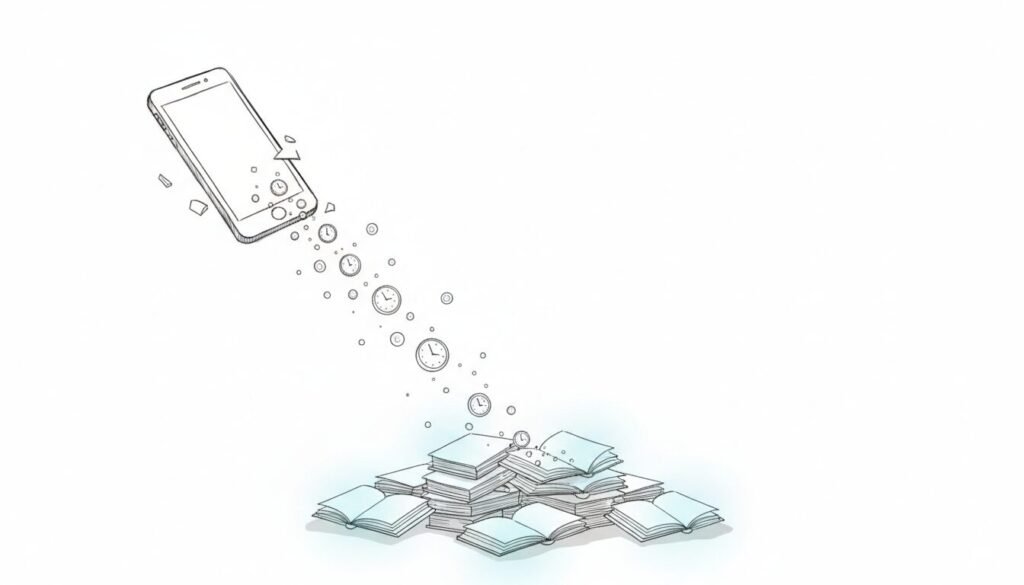
The difference is what accumulates. Three months of scattered five-minute sessions can add up to a new language foundation, a book every few weeks, or genuine understanding of something you’d been meaning to learn.
Someone who reads during commute time – even in small chunks – typically finishes 20-30 additional books per year compared to someone who doesn’t. The individual sessions feel insignificant. The compound effect is not.
Why This Is Harder Than It Sounds
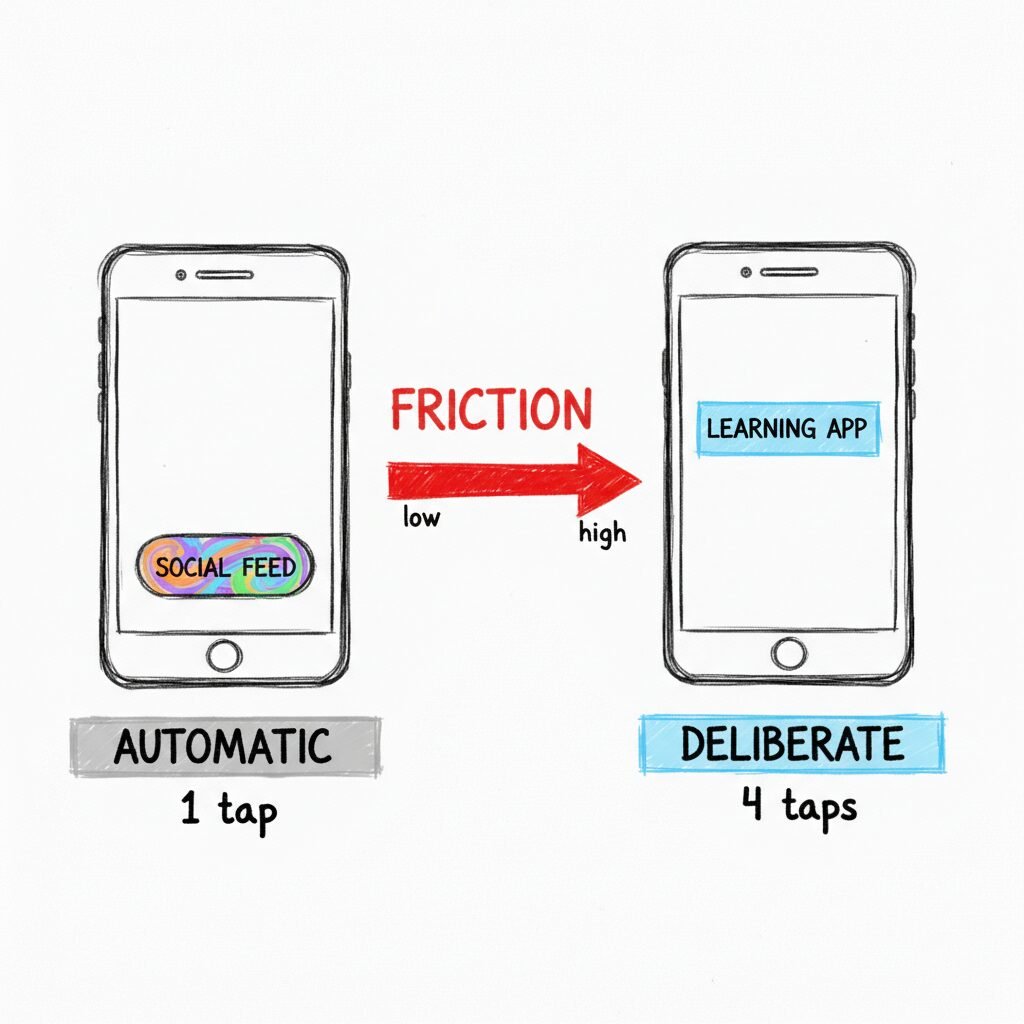
Knowing this doesn’t make it easy. The first problem is access. If opening Instagram takes one tap and opening a learning app takes four, Instagram wins. Every time.
The second problem is decision fatigue. “I should learn something” is too vague. When you’re tired and have three spare minutes, vague intentions lose to concrete options. The feed is always concrete: just open and scroll.
The third problem is that learning can become another form of mindless consumption. Watching random YouTube tutorials isn’t meaningfully different from scrolling if you’re not retaining anything or building toward something.
Making the Swap Actually Work
The people who successfully redirect spare-minute time share a few patterns:
They remove friction from the alternative. Learning apps on the home screen. Social apps deleted or buried in folders. The goal is making the replacement option as easy to reach as the original habit.
They pre-decide what to learn. Not “something interesting” but “Spanish vocabulary” or “that article I saved yesterday.” Specificity removes the decision at the moment of action.
They expect discomfort. The first week of any substitution habit feels wrong. Your brain expects the familiar hit and gets something different. This fades, but only if you push through the initial friction.
For people who want to use social media intentionally but find themselves sucked into algorithmic rabbit holes, browser extensions like MonkeyBlocker can bridge the gap between intention and action. The extension’s Impulse Check feature introduces a brief pause before sites load – a few seconds that let your conscious mind catch up with the automatic habit. Its Social Cleaner hides recommended content like Shorts and suggested posts while keeping posts from accounts you actually follow, making moderate use more viable. These friction-based tools work because they target the speed mismatch – slowing the automatic response just enough for deliberate choice to participate.
The Unexpected Side Effect
People who try this for a month often report something strange: they stop wanting to go back.
This isn’t because learning is inherently more fun than scrolling. It’s because the anxiety fades. The constant low-grade FOMO, the sense of falling behind, the vague dissatisfaction after a long scroll session – these feelings are so normal we don’t notice them until they’re gone.
Scattered learning time produces the opposite feeling: small accumulating wins, genuine curiosity satisfied, actual topics to discuss with people. The emotional residue is different.
What This Won’t Fix
Microlearning isn’t a productivity cure-all. It won’t fix deep procrastination on important projects. It won’t address underlying anxiety or attention difficulties that drive compulsive checking. It’s a redirect for scattered minutes, not a life overhaul.
Some people also find that any phone-based activity – even educational – keeps them in the same compulsive relationship with their device. For them, the answer might be boredom: simply not reaching for the phone at all. There’s genuine cognitive value in unstructured mental downtime that no app can replace.
A Different Relationship With Dead Time
The real shift isn’t about learning versus scrolling. It’s about reclaiming moments that currently evaporate without trace.
Those scattered minutes will pass regardless. They’ll either add up to nothing – or to something you didn’t expect to have time for.