How Digital Stimulation Erodes Focus and How to Reclaim Attention
You’ve been here before. Sitting down to work on something that matters, only to find yourself 45 minutes deep into a thread about celebrity drama or watching short videos you won’t remember tomorrow. The frustration isn’t just about lost time. It’s the creeping suspicion that something has changed in your brain, that focus used to come easier, that boredom didn’t always feel this unbearable.
That suspicion is probably correct. And understanding why might be the first step toward reclaiming something you didn’t realize you’d lost.
The Baseline Problem
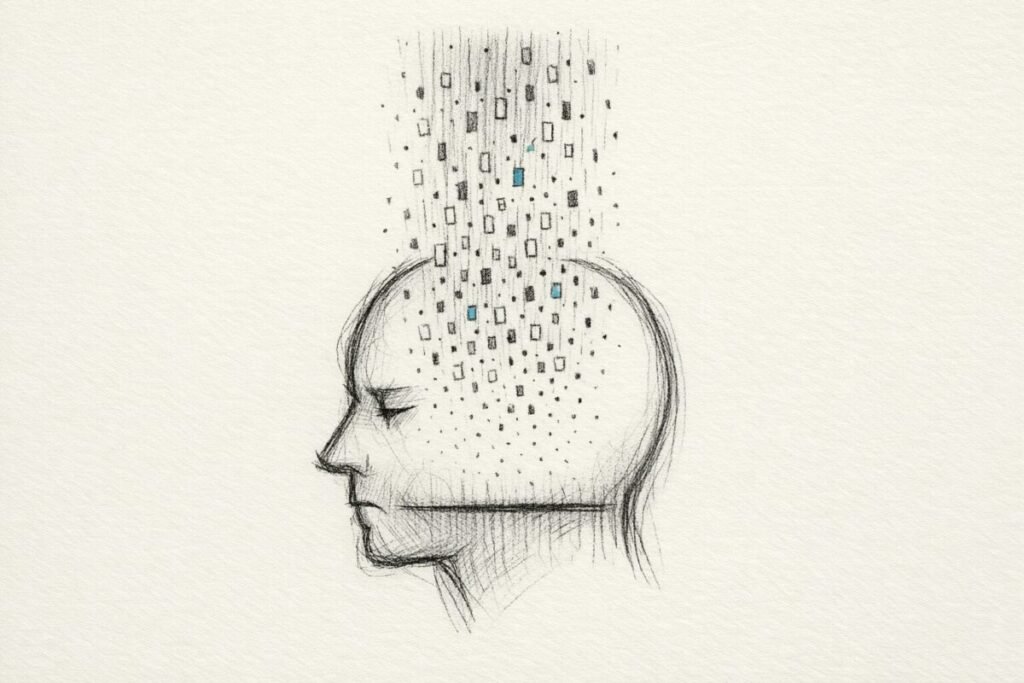
Your brain maintains what neuroscientists call a dopamine baseline. Think of it as your default setting for motivation and satisfaction. When everything works normally, ordinary activities feel reasonably engaging. Work isn’t thrilling, but it doesn’t feel like torture either.
Constant digital stimulation pushes this baseline down.
Every scroll through an algorithmic feed delivers tiny hits of novelty and reward. Your brain adapts by becoming less sensitive to dopamine. The result: normal life starts feeling flat. Reading feels tedious. Conversations seem slow. Work becomes almost physically uncomfortable without background stimulation.
The more you stimulate your brain with easy rewards, the harder it becomes to feel satisfied by anything that requires effort.
Most people interpret this as a personal failing. They think they lack discipline or have a short attention span by nature. But the machinery is working exactly as designed. Brains adapt to their environment. Flood the reward system with constant input, and it recalibrates to expect that level of stimulation as the new normal.
Why Knowing Doesn’t Help
Here’s where it gets frustrating. Understanding this mechanism doesn’t automatically fix it.
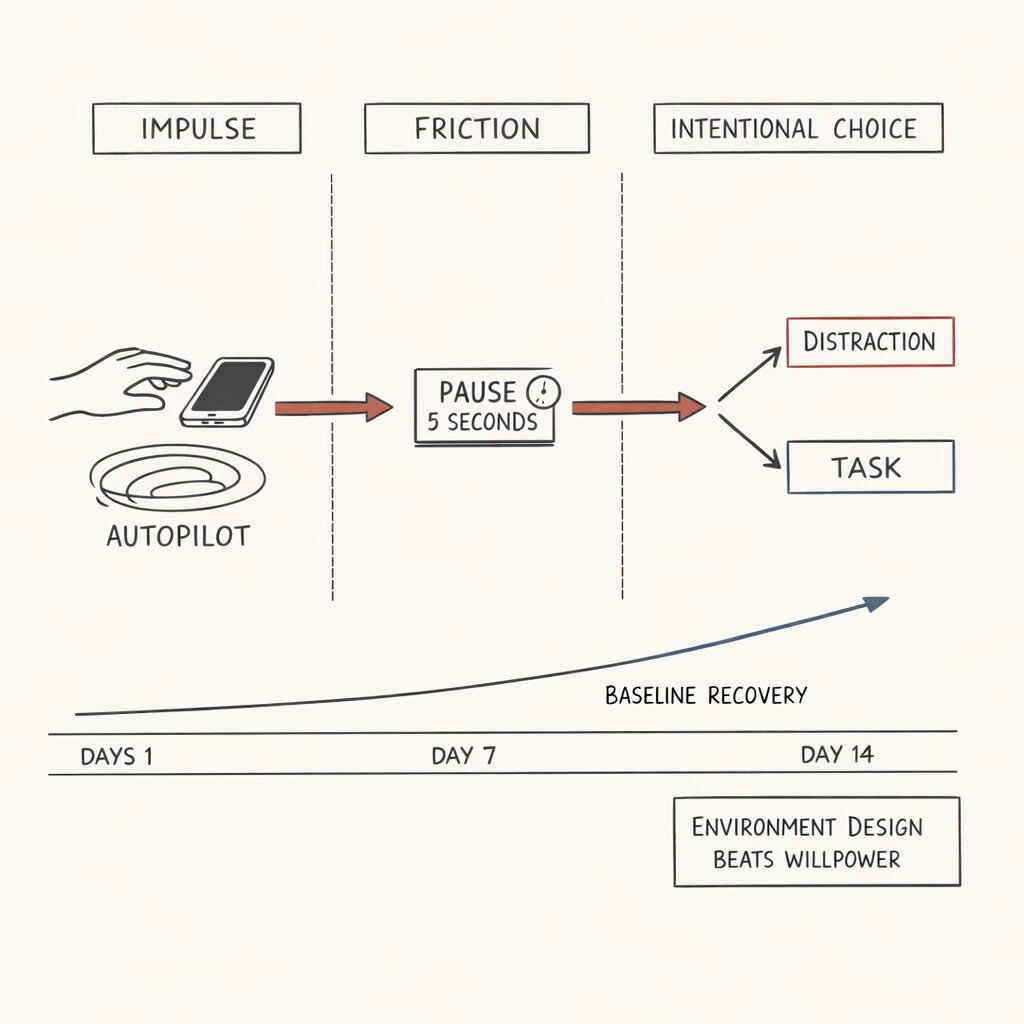
The habit of reaching for stimulation operates below conscious thought. By the time you notice you’ve opened an app, the decision already happened. Your prefrontal cortex, the part that makes deliberate choices, is too slow to intervene in behaviors that have become automatic.
This is why willpower-based approaches fail so reliably. You can’t think your way out of a habit that bypasses thinking.
The people who succeed at changing these patterns usually do it by changing their environment rather than trying to strengthen their resolve. They make the problematic behavior harder to do automatically.
Friction As Strategy
Most compulsive digital behavior is mindless. You don’t consciously decide to scroll for 40 minutes. You just pick up the phone during a moment of mild discomfort, and the next thing you know, an hour has vanished.
Adding small obstacles creates moments where conscious choice can actually participate. Even a few seconds of delay is often enough to break the automatic sequence.
This is the principle behind friction-based tools like MonkeyBlocker, a Chrome browser extension designed to interrupt automatic digital behaviors. Its Impulse Check feature introduces a brief pause before certain sites load, giving your prefrontal cortex time to catch up with the habit response. The Scroll Stopper inserts natural breaking points into infinite feeds, turning passive drift into a series of small decisions. These aren’t about restriction. They’re about creating space for intentional choice in moments that would otherwise happen on autopilot.
No tool solves the problem entirely. But addressing the speed mismatch between impulse and awareness is something willpower alone cannot do.
The Boredom Tolerance Gap
Research shows that simply having a smartphone nearby, even face down and silent, reduces available working memory. Your brain allocates resources to not checking it. The device doesn’t have to be active to fragment your attention.
But there’s a deeper issue. Constant stimulation has eroded the capacity to tolerate understimulation.
Boredom feels unbearable now partly because the brain has forgotten how to handle it. Every moment of emptiness gets immediately filled with content. The neural pathways for generating internal entertainment, for letting thoughts wander and connect, have atrophied from disuse.
Rebuilding this capacity works like strengthening a muscle. Start with small doses:
– Walking without headphones
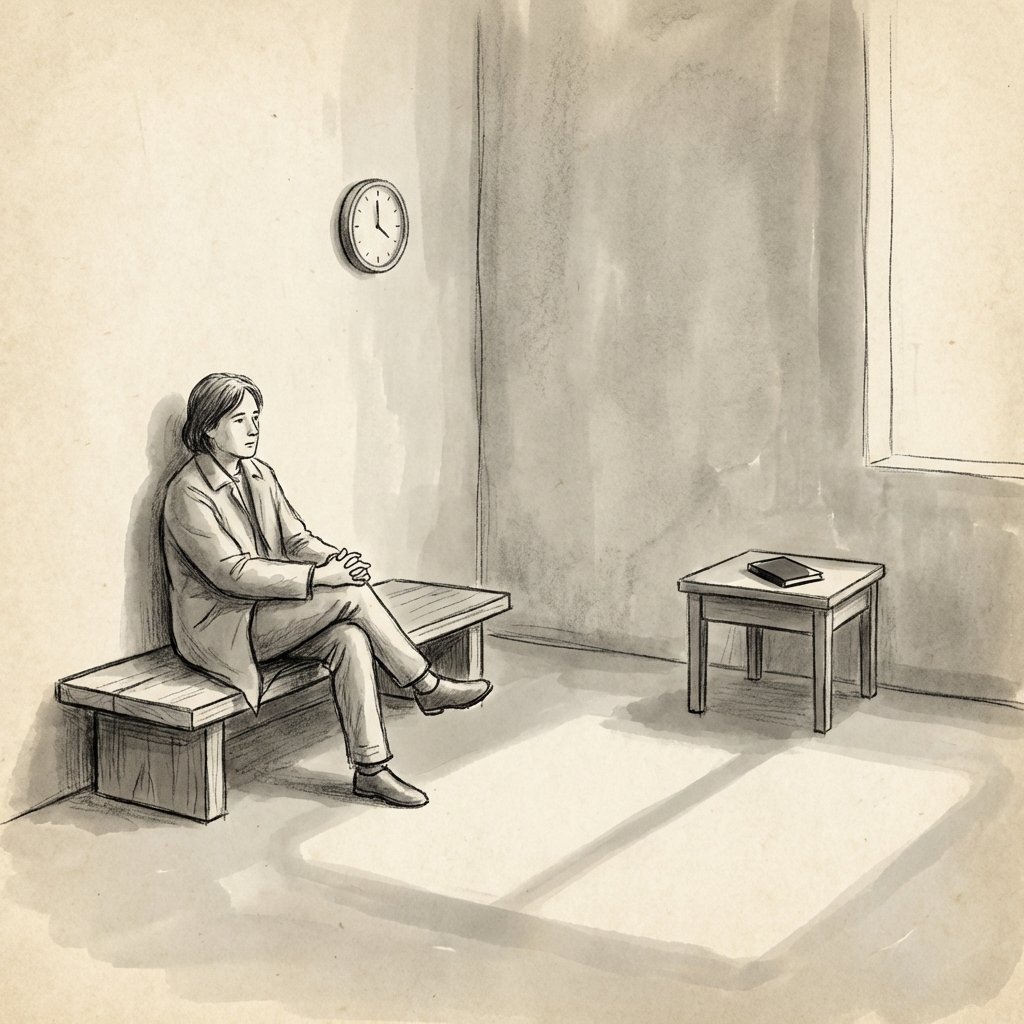
– Sitting in waiting rooms without reaching for the phone
– Driving in silence occasionally
– Letting meals happen without screens
The discomfort is real. That’s the point. You’re retraining circuits that have become dependent on external input.
What Recovery Actually Looks Like
Most people notice changes after about two weeks of deliberately reducing high-stimulation activities. Colors seem slightly brighter. Conversations become more interesting. Books regain their appeal.
This isn’t mystical. The dopamine baseline is simply returning to something closer to normal. Activities that seemed boring before start registering as engaging again because your reward system isn’t comparing everything to algorithmic content optimized for maximum engagement.
The goal isn’t eliminating enjoyment. It’s restoring the ability to feel satisfied by things that matter. Work. Learning. Relationships. Creative projects. The activities that require sustained attention and delayed gratification.
The Environment Always Wins
Your brain constantly seeks the path of least resistance. Right now, high-stimulation activities occupy that path. Picking up the phone requires less effort than starting a difficult task.
Reverse this relationship. Make beneficial activities easier and problematic ones slightly more annoying.
– Delete social media apps from your phone and access them only on a computer
– Turn off all non-essential notifications
– Put your phone in another room during focused work
– Use browser extensions that block or add friction to distracting sites during certain hours
These changes feel minor, but they compound. Environment design beats willpower every time because it doesn’t require constant vigilance. The decision gets made once, and the environment handles the rest.
A Different Kind of Nothing
There’s something almost revolutionary about doing nothing in a world engineered to prevent exactly that. Every feed, every autoplay, every notification is designed to capture and monetize attention. Opting out, even temporarily, feels like reclaiming something that was taken without permission.
The brain you have now isn’t the brain you’re stuck with. Neural plasticity works in both directions. The same mechanisms that allowed constant stimulation to reshape your reward system can be leveraged to restore it.
But restoration requires something the entire digital ecosystem is designed to prevent: sustained periods of genuine understimulation. Not relaxation content. Not calming playlists. Actual nothing.
Sitting with the discomfort until it becomes tolerable, then neutral, then almost interesting. That progression is the rebuilding process itself.