How Dopamine Baseline Impacts Attention and Digital Habits
You’re staring at the same paragraph for the third time. The words haven’t changed, but somehow they refuse to stick. Your eyes keep sliding off the page, pulled toward the phone sitting face-down on the table. You haven’t touched it in four minutes. It feels like forty.
This isn’t a character flaw. And it probably isn’t ADHD, though the symptoms look identical. Something else is happening, and understanding it might be the difference between fighting your brain forever and actually getting it back on your side.
The Baseline Problem
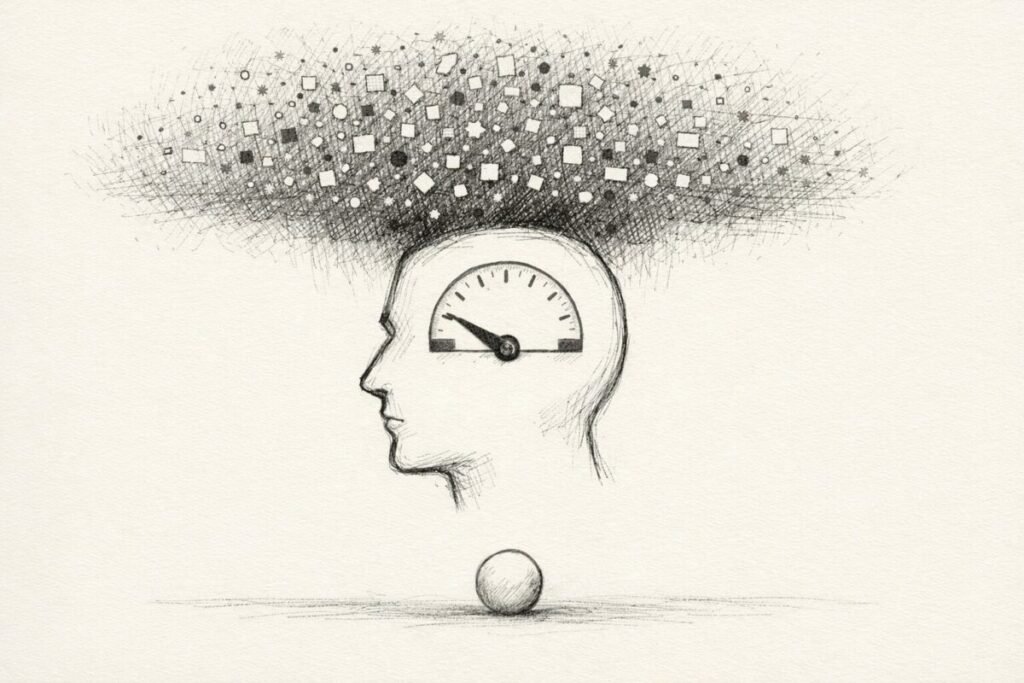
Your brain maintains something like a thermostat for pleasure and motivation. Neuroscientists call it your dopamine baseline. When everything works normally, ordinary activities feel reasonably satisfying. A conversation holds your interest. A slow afternoon doesn’t feel like torture.
But the baseline can shift.
Flood your brain with enough stimulation, and it adapts by lowering its resting point. What used to feel fine now feels flat. What used to be interesting now seems unbearably dull. You haven’t become lazy or broken. Your brain simply recalibrated to expect a constant stream of novelty.
The cruelest part of dopamine overload is that it doesn’t feel like excess. It feels like the bare minimum required to feel okay.
This explains something puzzling: why people surrounded by more entertainment options than any generation in history report feeling bored more often, not less. The entertainment isn’t failing. The capacity to be entertained is.
Your Phone Is Using Resources Even When You Ignore It
Here’s something that surprised researchers: having a smartphone nearby reduces cognitive performance even when it’s turned off, face-down, and completely silent.
The explanation isn’t mystical. Your brain knows the phone is there. It allocates mental resources to not checking it. Those resources have to come from somewhere, so your working memory and problem-solving ability take the hit.
Most people experience this as a vague sense of mental fog they can’t explain. Everything feels harder than it should. Concentration requires constant effort. The phone doesn’t even have to distract you directly. Its presence is enough.
Why Willpower Keeps Failing
The standard advice is to try harder. Just put the phone down. Just focus. Just stop scrolling.
This advice misunderstands how these behaviors actually work.
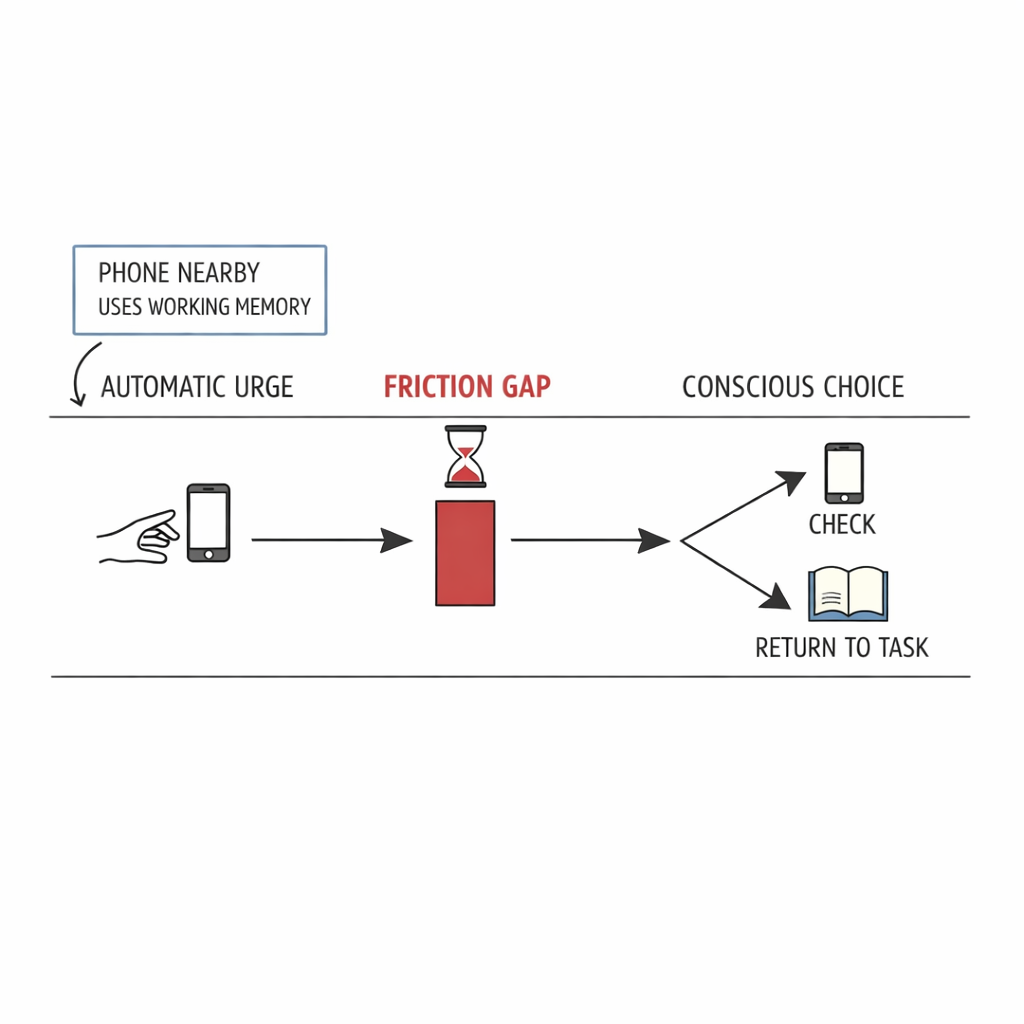
When you reach for your phone during a moment of boredom or discomfort, the reaching happens before you consciously decide to do it. The habit fires faster than the decision-making part of your brain can intervene. By the time you think “I should stop,” you’re already three posts deep.
Willpower fails because it arrives after the behavior has already started.
This is why friction-based approaches often work better than motivation-based ones. Instead of trying to want the right thing harder, you change what’s easy and what’s hard.
Browser extensions like MonkeyBlocker apply this principle to digital habits. The extension’s Impulse Check feature introduces a brief delay before certain websites load, creating a gap between the automatic urge and the actual page appearing. Those few seconds allow your conscious mind to participate in a decision your habit system was about to make without you. For infinite scrolling, the Scroll Stopper inserts natural breaking points into feeds, turning passive drift into repeated moments of active choice.
These tools don’t fix anything by themselves. But they target the real problem: the speed at which digital habits bypass conscious thought.
Boredom Tolerance Is Trainable
The ability to sit with nothing, to let your mind wander without reaching for stimulation, sounds simple. For most people now, it’s genuinely difficult.
But difficulty isn’t the same as impossibility. Boredom tolerance responds to training like any other capacity.
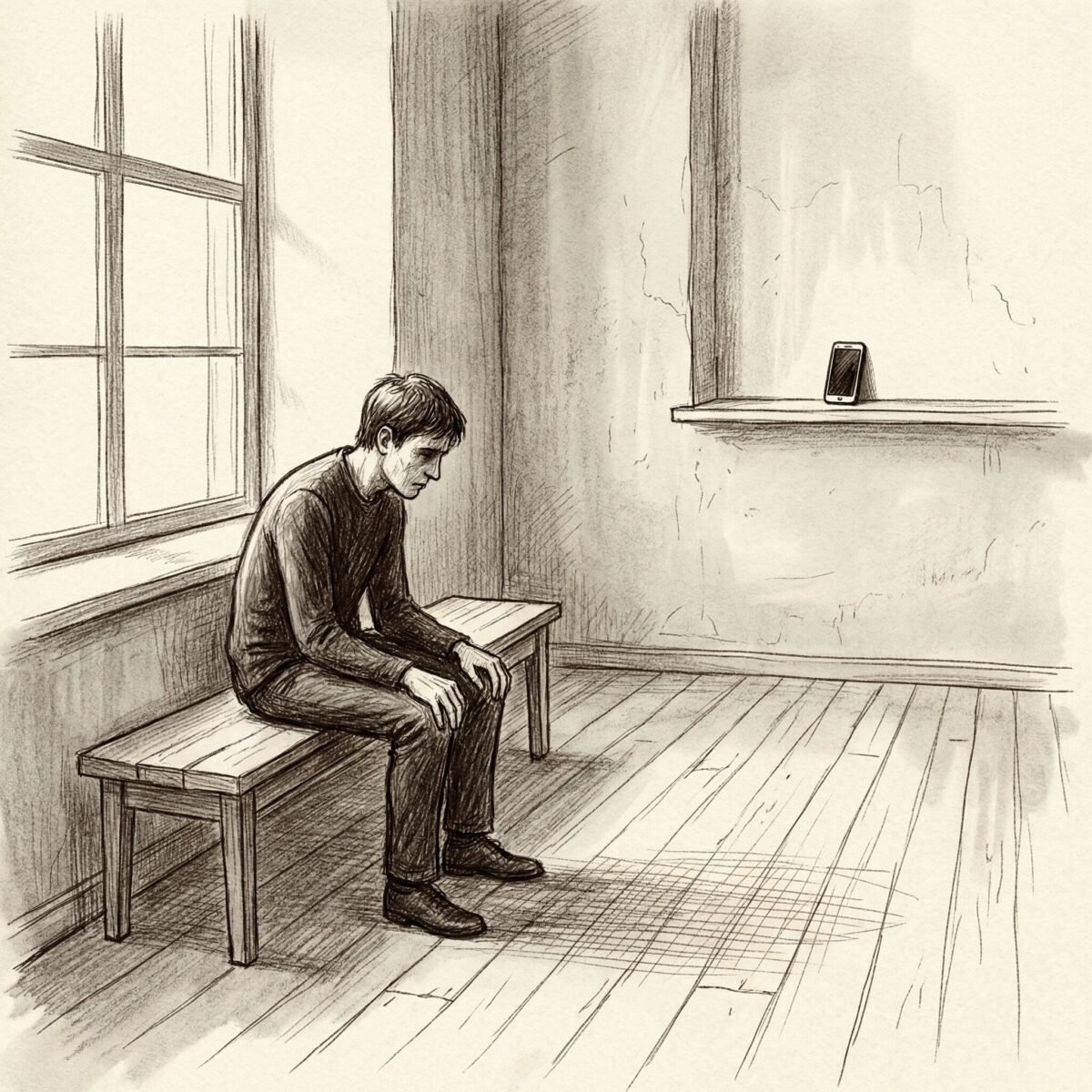
The method is unglamorous: spend small amounts of time doing nothing. Walking without headphones. Waiting without your phone. Sitting in a quiet room. Your brain will object. That objection is the exercise.
Each time you tolerate mild discomfort without reaching for a quick fix, you’re building something. Not discipline in the motivational-poster sense. Something more practical: the neural pathways that make sustained attention possible.
What Recovery Actually Looks Like
People who successfully reset their stimulation levels report a consistent pattern. The first few days feel awful. Anxious. Boring. Like something is missing.
Then, usually within two weeks, things start to shift.
Reading becomes easier. Conversations hold attention longer. Tasks that seemed impossibly tedious become merely tedious, then actually engaging. The world doesn’t change. But the capacity to be interested in it returns.
Normal activities start to feel like enough.
This isn’t about becoming a monk or swearing off technology. It’s about restoring balance, so that enjoyment doesn’t require escalating doses of novelty, and so that difficulty doesn’t feel unbearable.
The Environment Always Wins
Your brain constantly seeks the path of least resistance. High-stimulation activities have become that path. They’re faster, easier, and more immediately rewarding than almost anything else available.
The solution isn’t to fight your brain’s tendency to seek easy rewards. It’s to restructure your environment so that the easy option is also the beneficial one.
Delete apps you use compulsively, keeping access only on less convenient devices. Turn off notifications that don’t require immediate response. Create physical distance between yourself and the sources of quick stimulation. These changes feel small, but they accumulate.
Every tiny barrier creates a moment where conscious choice can happen. That’s all you need: moments. Enough of them, strung together, and the automatic behaviors start to weaken.
The strange truth about attention is that it’s both more fragile and more recoverable than most people assume. Years of overstimulation can erode it. But the brain adapts in both directions. The same plasticity that created the problem can undo it, given different conditions.
It just requires doing the thing our entire digital environment is optimized to prevent: tolerating the quiet.