How External Cues Help ADHD Brains Start and Finish Tasks
The Nudge That Starts Everything
Someone who lives with two people who have ADHD recently shared an observation that stopped a lot of people in their tracks: “If I can tell they’re procrastinating on something, I just ask ‘what do you need to do?’ and that’s literally all it takes for them to start doing it.”
That single sentence explains more about ADHD than most clinical descriptions ever could. And it reveals something important about how task initiation works in ADHD brains versus neurotypical ones.
Why Starting Is the Actual Problem
Most people assume that when someone with ADHD doesn’t do something, they don’t want to do it. Or they’re lazy. Or they lack discipline.
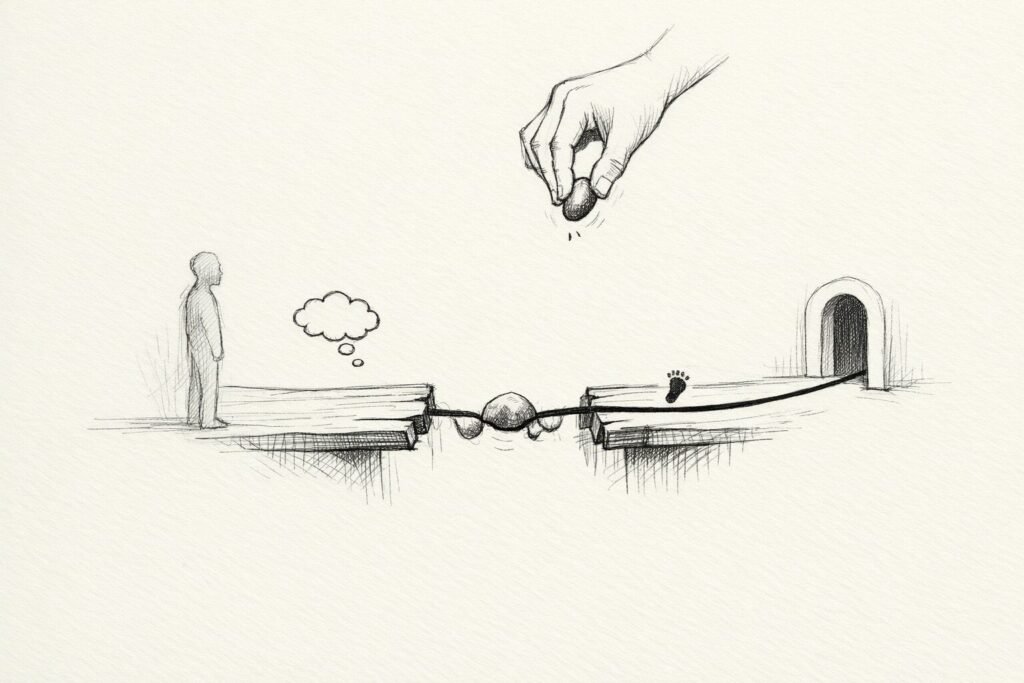
But here’s what actually happens: the brain knows what needs to be done. The person wants to do it. They might even be stressed about not doing it. Yet the signal that converts “I should do this” into “I am doing this” doesn’t fire reliably.
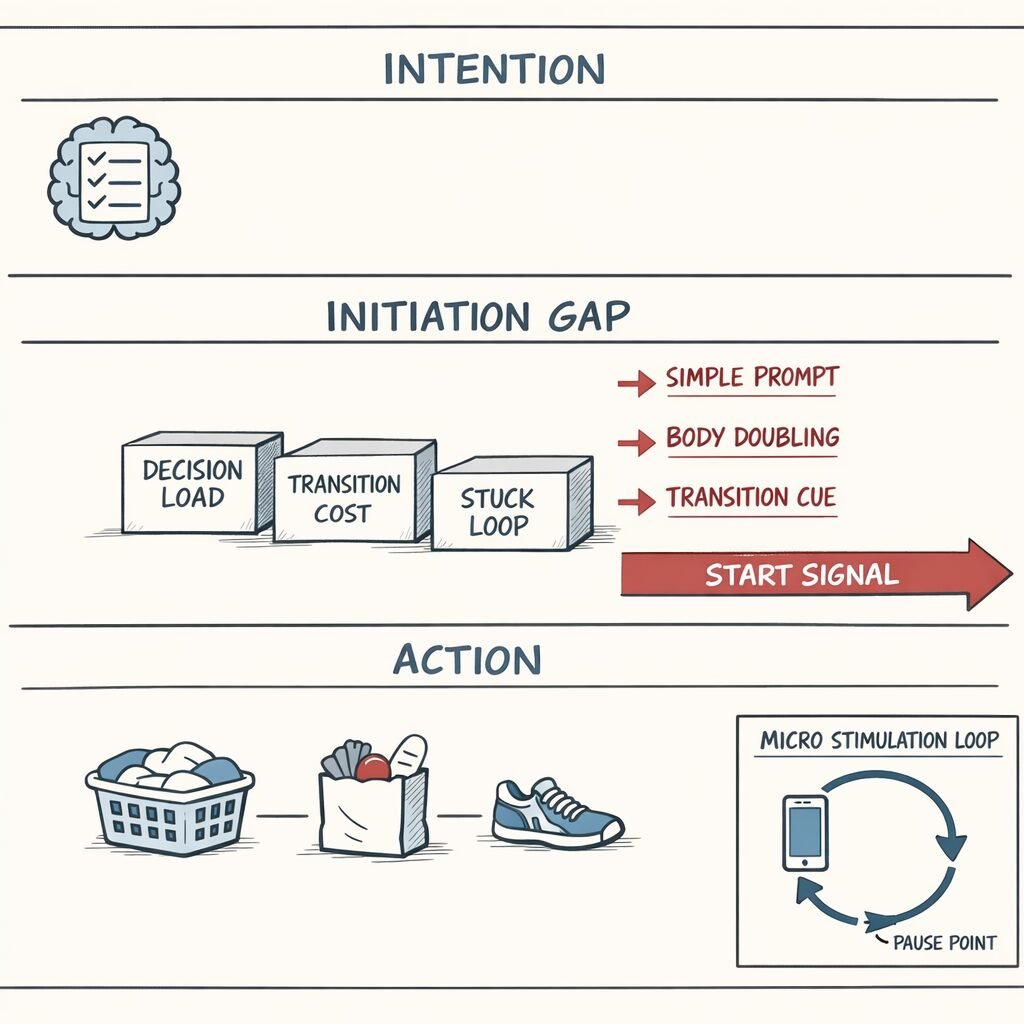
The gap isn’t between knowing and caring. It’s between intending and initiating.
Neurotypical brains handle this transition almost invisibly. You think “I should start laundry,” and then you’re walking toward the laundry basket. The thought converts to movement without conscious effort.
ADHD brains often need an external catalyst. A roommate’s question. A deadline. A phone alarm. Something outside the head that bridges the gap between intention and action.
The Invisible Labor of a “Simple” Day
The same observer noted something else that resonated with thousands of people: their roommates would describe a whole day as “I did laundry, got groceries, and went on a walk.” To someone without ADHD, that sounds like 90 minutes of activity, tops.
But here’s what that list doesn’t include:
The 45 minutes spent trying to start the laundry
The mental negotiation about which task to do first
The recovery time needed after transitioning between activities
The executive function drain of making small decisions (which detergent? which route to the store?)
Many people with ADHD didn’t realize until reading that observation that completing three tasks in a day wouldn’t be considered productive by neurotypical standards.
That’s not a failure of effort. It’s a difference in cognitive overhead.
Why External Cues Work So Well
When someone asks “what do you need to do?” they’re providing something the ADHD brain struggles to generate internally: a moment of activation.
The question works because it does several things at once. It interrupts the current state. It brings the buried intention to the surface. It creates a social expectation, even a gentle one. And it gives the brain a clear target.
This isn’t about accountability in the punitive sense. It’s about co-regulation, where one person’s nervous system helps stabilize another’s.
People with ADHD often describe feeling like they’re “waiting for something” before they can start a task. The external cue provides that something.
The Sleep Paradox
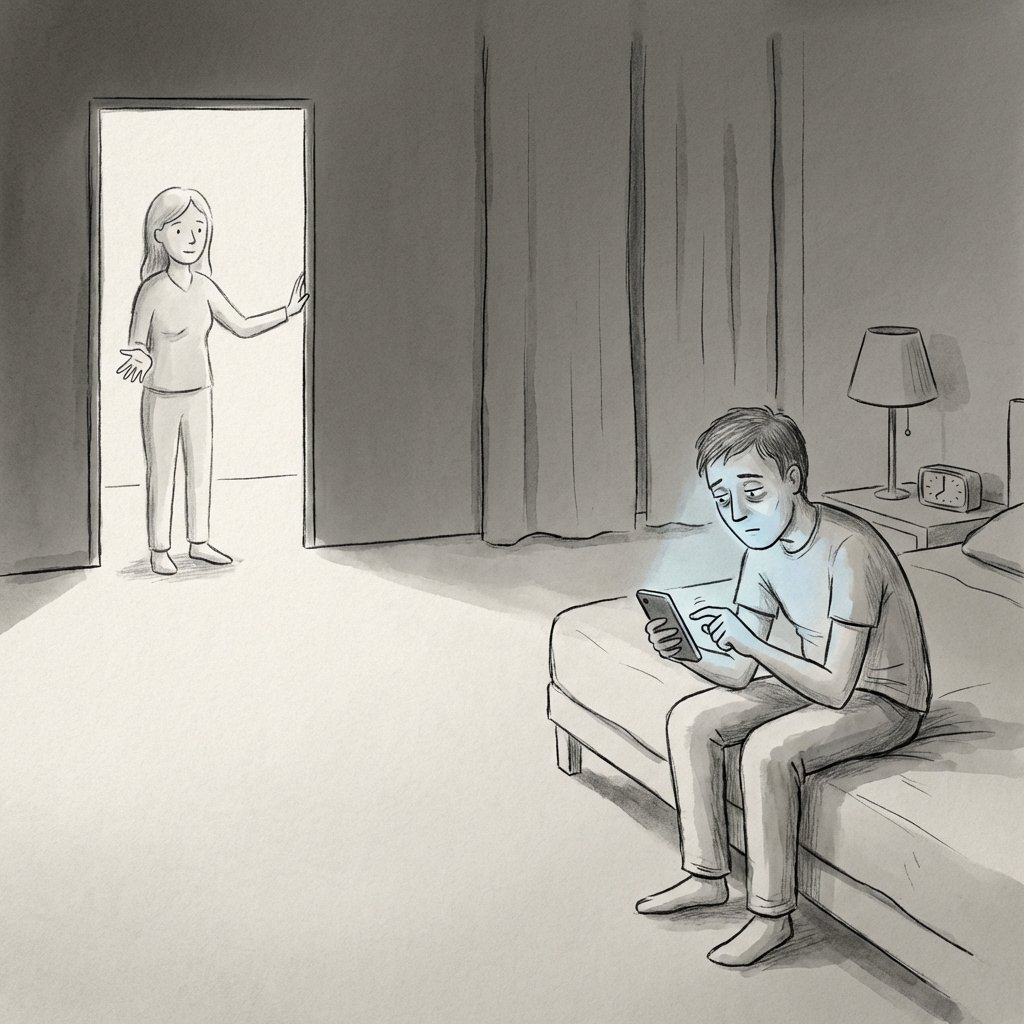
Another observation from living with ADHD roommates: they stay up scrolling even when they say they don’t want to. Then they complain about being tired the next day.
From the outside, this looks like a choice. Just put the phone down. Go to bed.
From the inside, it’s more like being stuck in a current. The phone provides constant micro-stimulation. Each scroll delivers a tiny hit of novelty. The ADHD brain, which struggles with transitions, finds it nearly impossible to break the pattern without external help.
The roommate’s simple “let’s go to sleep now?” worked because it provided exactly what the scrolling brain couldn’t generate: a transition point.
Building External Structure
Not everyone has a roommate who intuitively provides these cues. But the principle still applies: ADHD brains often need external structure to do what internal motivation cannot.
This is why environmental design matters more than willpower for digital habits. Browser extensions like MonkeyBlocker apply this principle to screen behavior. The extension’s Impulse Check feature creates a brief pause before distracting sites load, giving the conscious mind time to catch up with automatic behavior. Its Scroll Stopper inserts natural breaking points into infinite feeds, mimicking what that helpful roommate does when they say “let’s go to bed.”
These friction-based tools work because they externalize what the ADHD brain struggles to generate internally: moments of pause and transition. They’re not about restriction. They’re about creating the cues that make starting and stopping possible.
What Helps, What Doesn’t
Knowing this about ADHD changes what kind of support actually matters.
What doesn’t help: Lectures about time management. Suggestions to “just start.” Frustration about inconsistency.
What does help: Simple, non-judgmental prompts. Body doubling (being physically present while someone works). Reducing the number of decisions required. Creating transition cues, whether from a person, a timer, or a designed environment.
The roommate who asks “what do you need to do?” isn’t solving ADHD. They’re doing something smaller and more useful: providing a bridge between intention and action, exactly when it’s needed.
A Different Kind of Understanding
The observer who shared these reflections admitted they used to think “everyone is a little bit ADHD.” Living closely with people who have it changed that view entirely.
The difference isn’t that people with ADHD experience things neurotypical people don’t. It’s that they experience the same struggles, but without the automatic override that makes things feel manageable.
The next time someone with ADHD is stuck, the most helpful thing might not be advice. It might just be a question: “What do you need to do?”
Sometimes that’s all it takes.