
The Platform That Doesn’t Exist Yet
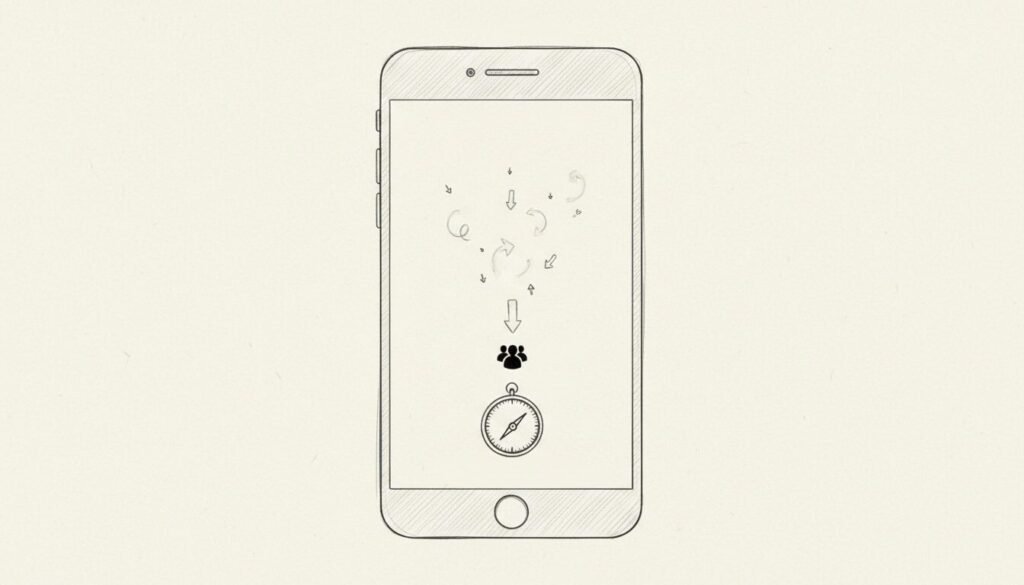
Picture opening a social media app and seeing only what you asked to see. Posts from people you chose to follow, in the order they were posted. No suggested content. No autoplay videos competing for the next hour of your life. No number telling you how many strangers approved of your last photo.
It sounds like a fantasy. But the interesting question isn’t whether such a platform could exist – it’s why the features we’re imagining removing were added in the first place.
Understanding that reveals something important about why current social media feels so draining, and what genuine connection online might actually require.
The Performance Problem
Most people think social media exhaustion comes from spending too much time scrolling. That’s part of it. But there’s something more fundamental happening.
Every platform with visible metrics turns sharing into performing.
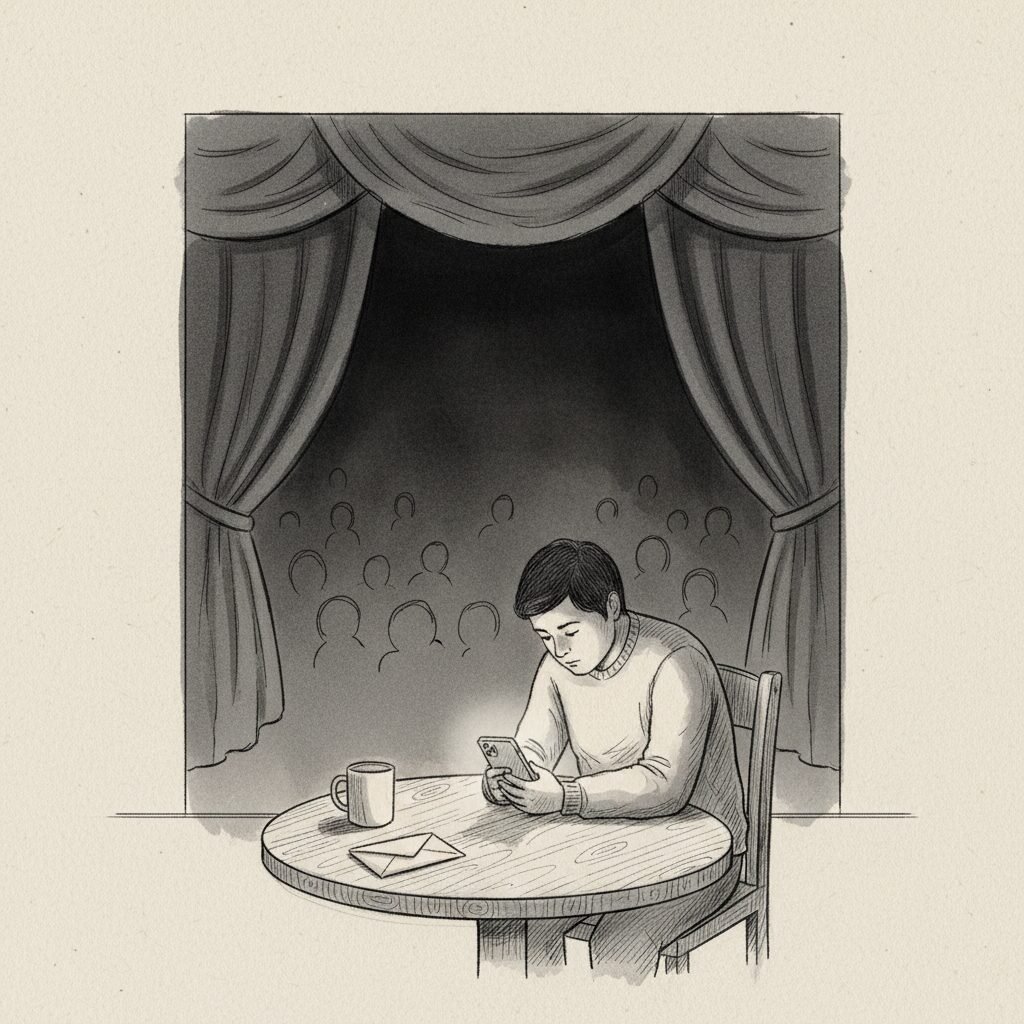
When you post something and can immediately see how it’s being received – likes accumulating, comments appearing, view counts climbing – you’re not just sharing. You’re putting something on stage and watching the audience react in real time. That creates a specific kind of psychological pressure that doesn’t exist in other forms of communication.
Writing a letter to a friend feels different than posting to hundreds of followers. The letter is communication. The post is, whether you intend it or not, a performance with measurable success or failure.
What Algorithms Actually Optimize For
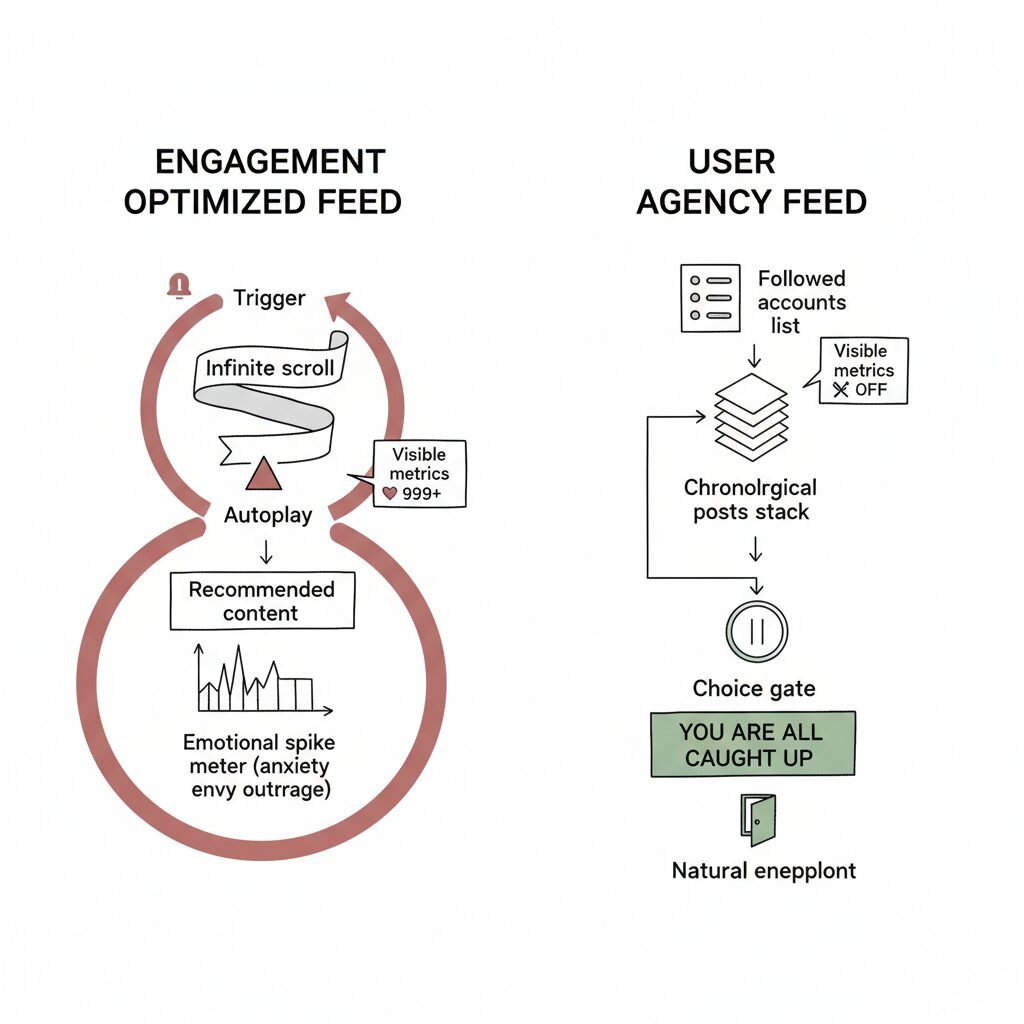
Here’s what’s rarely said plainly: algorithms don’t optimize for your satisfaction. They optimize for engagement. These sound similar but produce radically different outcomes.
Satisfaction means you got what you wanted and can stop. Engagement means you keep going.
Content that makes you slightly anxious, outraged, or envious keeps you scrolling longer than content that makes you feel complete. Platforms discovered this through billions of data points. They didn’t set out to make you miserable – they set out to keep you watching, and misery turned out to be more effective than contentment.
The feed isn’t showing you what you want to see. It’s showing you what will make you keep looking.
This explains why so many people report feeling worse after using social media even when they intended to enjoy it. The platform’s goals and your goals are fundamentally misaligned.
The Features That Would Actually Help
Strip away the business model and imagine social media designed purely for human benefit. Several patterns emerge:
- Chronological feeds only – showing posts in the order they happened, from people you chose to follow
- No visible metrics – removing likes, view counts, and follower numbers entirely
- Natural endpoints – the “you’re all caught up” message Instagram briefly experimented with, then quietly removed
- Follow limits – acknowledging that humans can’t meaningfully track more than a certain number of people
- No autoplay – requiring a deliberate choice before each piece of content begins
Notice what all these have in common: they return agency to the user. They create moments of choice where current designs create continuous drift.
Why This Isn’t About Willpower
The standard advice is to use social media more intentionally. Set time limits. Be more disciplined. This advice fails for a predictable reason.
You’re not struggling against your own weakness. You’re struggling against thousands of engineers whose full-time job is making their product harder to put down. The features that feel like conveniences – infinite scroll, autoplay, algorithmic recommendations – exist specifically because they work against your ability to stop.
Recognizing this isn’t an excuse. It’s accurate information about the actual challenge.
For people who want to use social media intentionally but find themselves sucked into algorithmic rabbit holes, friction-based tools like MonkeyBlocker can help level the playing field. MonkeyBlocker is a Chrome browser extension that creates small obstacles at the moment of impulse. Its Social Cleaner feature hides recommended content – Shorts, Reels, suggested posts – while keeping posts from accounts you actually follow. The Scroll Stopper inserts natural breaking points into infinite feeds, creating moments where continuing requires a conscious choice rather than passive drift.
These aren’t complete solutions. No tool is. But they address something willpower alone cannot: the speed at which digital habits bypass conscious thought.
The Nostalgia Tells Us Something
When people describe healthier social media, they often describe the past. Early Facebook, when it was only college students posting about their actual lives. LiveJournal, where people shared journal entries with small circles of friends. Even MySpace, with its clunky customization and limited reach.
These platforms weren’t designed to be healthier. They were just designed before anyone figured out how profitable attention capture could be.
The nostalgia isn’t really about specific features. It’s about a different relationship between user and platform – one where the platform existed to serve you, not to extract maximum engagement from you.
What Connection Actually Requires
The deepest irony of social media is that platforms promising connection often deliver isolation. Scrolling through curated highlights of other people’s lives isn’t connection. It’s observation.
Real connection requires vulnerability, reciprocity, and limited audience. A group chat with close friends. A direct message conversation. A small forum where you recognize the regulars.
Scale is the enemy of genuine connection. The same features that let you broadcast to thousands prevent you from truly being seen by anyone.
The Uncomfortable Truth
A truly healthy version of social media might not be a platform at all. It might look more like a phone call. Or a text thread. Or meeting for coffee.
The features people wish for – smaller audiences, no metrics, no algorithms, natural endpoints – all point toward something that resembles private communication more than public broadcasting. Which raises an uncomfortable question about what we’re actually looking for when we open these apps, and whether any platform can provide it.