Why Simple Productivity Systems Work Better Than Complex Ones
The Productivity System That Actually Works Has Almost No System
You’ve done it before. Spent an entire Saturday setting up a new task manager. Color-coded labels. Nested projects. Tags for urgency, context, and energy level. By Sunday evening, the system looked beautiful. By Wednesday, you hadn’t opened it once.
There’s a pattern hiding here, and it’s not about finding the right app. The most effective people – the ones who consistently ship work that matters – tend to use systems so simple they barely qualify as systems at all. Understanding why might change how you approach your entire day.
Complexity Is Camouflage
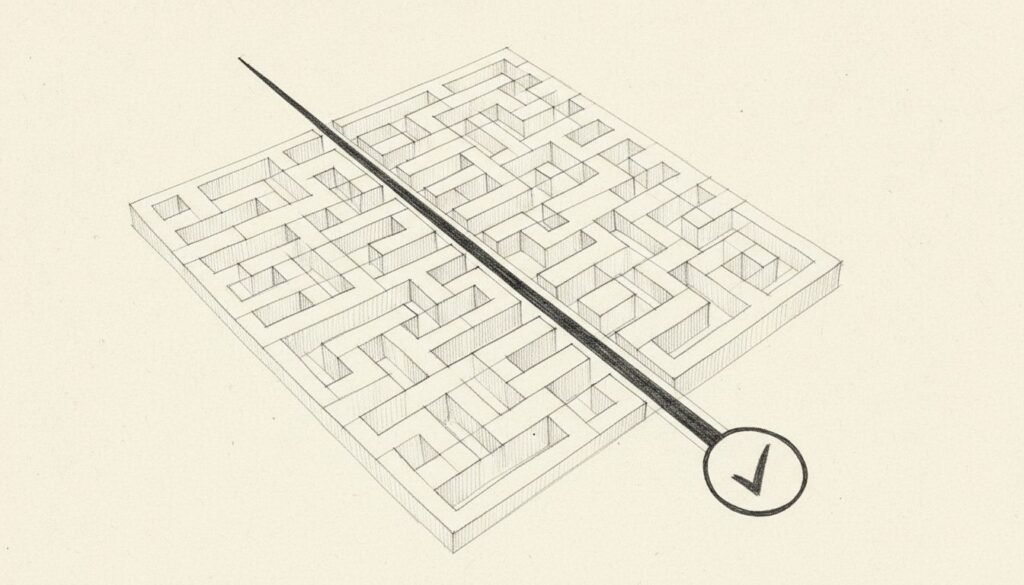
Elaborate productivity setups feel like work. That’s precisely the problem.
When you spend an hour organizing tasks into a multidimensional matrix, your brain registers accomplishment. Dopamine fires. You feel productive. But nothing external has changed. No email sent. No project advanced. No difficult conversation had.
The more sophisticated the system, the more time gets absorbed by maintenance rather than output.
Think about someone you know who consistently gets important things done. Chances are their “system” would embarrass a productivity influencer. A notebook. A single list. Maybe just their memory and a calendar. What they lack in organizational elegance, they gain in execution time.
The Real Cost of Choices
Every decision depletes the same mental resource. Choosing what to work on. Deciding which tag to apply. Figuring out if something is “urgent” or “important” or both.
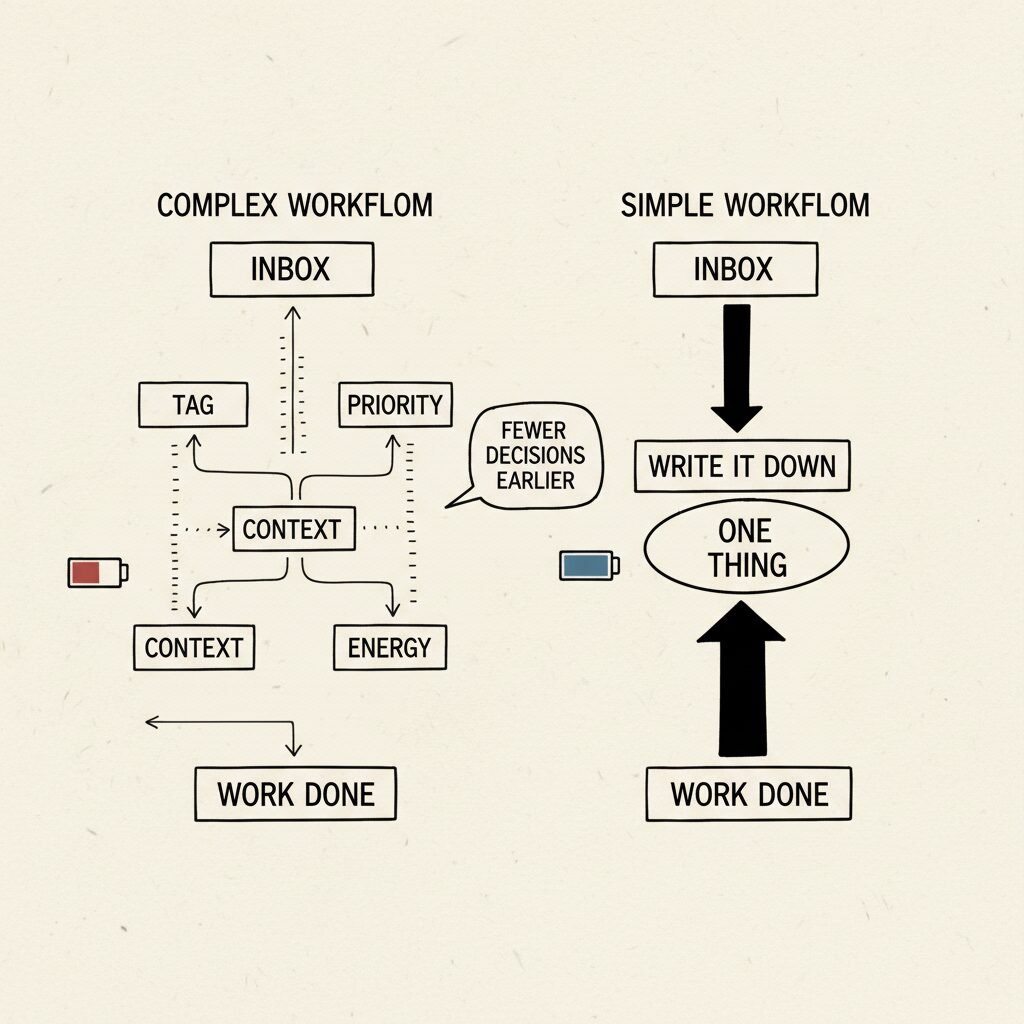
By the time you’ve processed your inbox through a complex workflow, you’ve made dozens of micro-decisions. The mental energy that could have fueled deep work got spent on administrative overhead instead.
This is decision fatigue, and it’s not a character flaw. It’s a cognitive limitation everyone shares.
The alternative: make fewer decisions earlier. Write things down. Pick one thing. Do it.
Why Paper Still Works
Digital tools promise efficiency, but they come bundled with something else: infinite other things to do.
Open a task app on your phone and you’re one tap away from email, social media, that article you saved three weeks ago. The environment works against focus before you’ve even started.
Handwriting forces a different kind of engagement. The physical act slows thinking just enough to create clarity. You can’t copy-paste vague intentions – you have to articulate them.
A task written by hand tends to be more specific than one typed, because the friction of writing demands you think it through first.
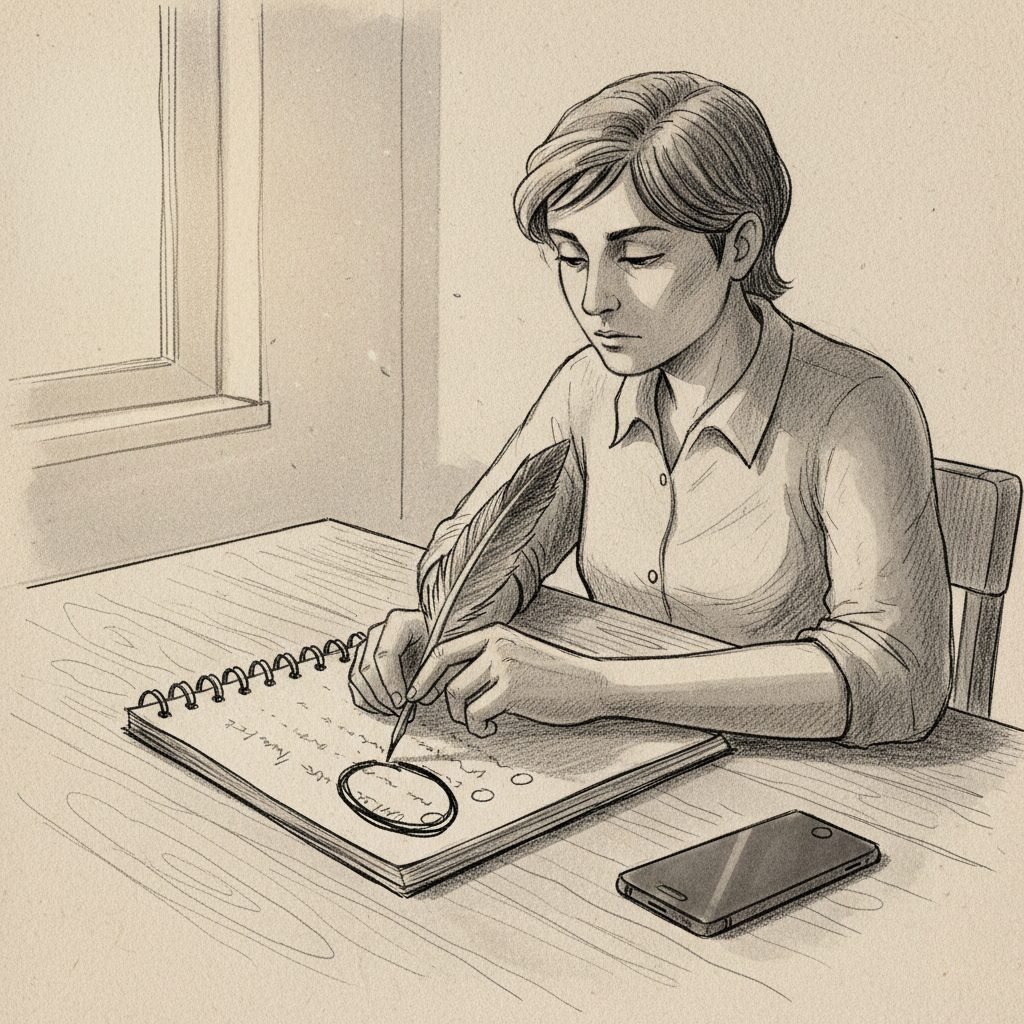
There’s another advantage: visibility. A notebook sitting on your desk doesn’t get buried under browser tabs. The task you circled this morning stays in your peripheral vision, quietly insistent.
The One-Thing Question
Most people think prioritization means ranking everything in order. But that approach still leaves you making decisions all day. Finish task three, now pick between tasks four and five.
A simpler frame: What single thing, if completed today, would make everything else easier or less necessary?
Not the quickest win. Not the loudest demand. The one thing that actually moves the needle.
This question does something counterintuitive. It makes the answer obvious most of the time. You usually know what matters most. The elaborate system was partly a way to avoid admitting it.
When Digital Friction Helps
For people whose work lives primarily on screens, abandoning digital tools entirely isn’t realistic. But the same principle – reducing decisions, increasing friction against distraction – can apply online.
The challenge is that digital environments are engineered for the opposite. Every app wants your attention. Algorithms serve content designed to capture you before conscious thought kicks in. The gap between “I’ll just check one thing” and “where did the last hour go” is often measured in milliseconds.
This is where environmental design matters more than willpower. Browser extensions like MonkeyBlocker apply a behavioral science principle: adding small delays at the moment of impulse. The Impulse Check feature introduces a brief pause before distracting sites load – not blocking access, but creating enough friction for the conscious mind to participate in what was about to be an automatic decision. For infinite scroll environments, its Scroll Stopper inserts natural breaking points, turning passive drift into active choices about whether to continue.
These tools work because they target the actual problem. The issue isn’t that you don’t know social media wastes time. It’s that the behavior happens faster than knowing can intervene.
The Uncomfortable Truth About Simple Systems
Simple systems expose you to something uncomfortable: the work itself.
Complex systems create a buffer. There’s always something to optimize, reorganize, or migrate to a new platform. You stay busy without confronting the task that actually matters.
A handwritten list with one circled item offers no such protection. The thing you’re avoiding sits there, undeniable.
This is partly why simple systems feel harder despite being easier. They remove the productive-feeling activities that weren’t actually productive.
What This Looks Like in Practice
Tomorrow morning, before opening any device:
– Write down everything on your mind that needs doing
– Circle one item – the one that would matter most
– Do that circled item before anything else gets your attention
No tags. No due dates. No priority matrices.
If this feels too simple to work, that reaction itself is worth examining. The instinct toward complexity often masks resistance to the work underneath.
A Final Thought
The people who accomplish remarkable things rarely credit their organizational systems. They credit showing up, repeatedly, to do the thing that mattered most that day. The system – such as it was – just helped them remember what that thing was. Everything else turned out to be decoration.