What Happens After Quitting Instagram: Rebuilding Genuine Interests
The Unsettling Quiet After Quitting Instagram
Something strange happens when you finally delete the app. Not in the first few hours, when you feel proud and a little self-righteous. But a few days later, when you reach for your phone out of habit and find nothing to reach for.
The emptiness that shows up isn’t about missing Instagram. It’s about discovering that the hobbies you thought you had were never really hobbies at all. They were content production. And without an audience, the whole system collapses.
If you’ve experienced this disorientation, what follows might help you understand what’s happening and what genuine interest actually feels like when no one’s watching.
When Activities Lose Their Reason to Exist
Picture someone who loved cooking. They planned elaborate meals, photographed each dish, adjusted the lighting, posted it, watched the likes accumulate. Then they deleted Instagram.
Suddenly, the kitchen feels pointless.
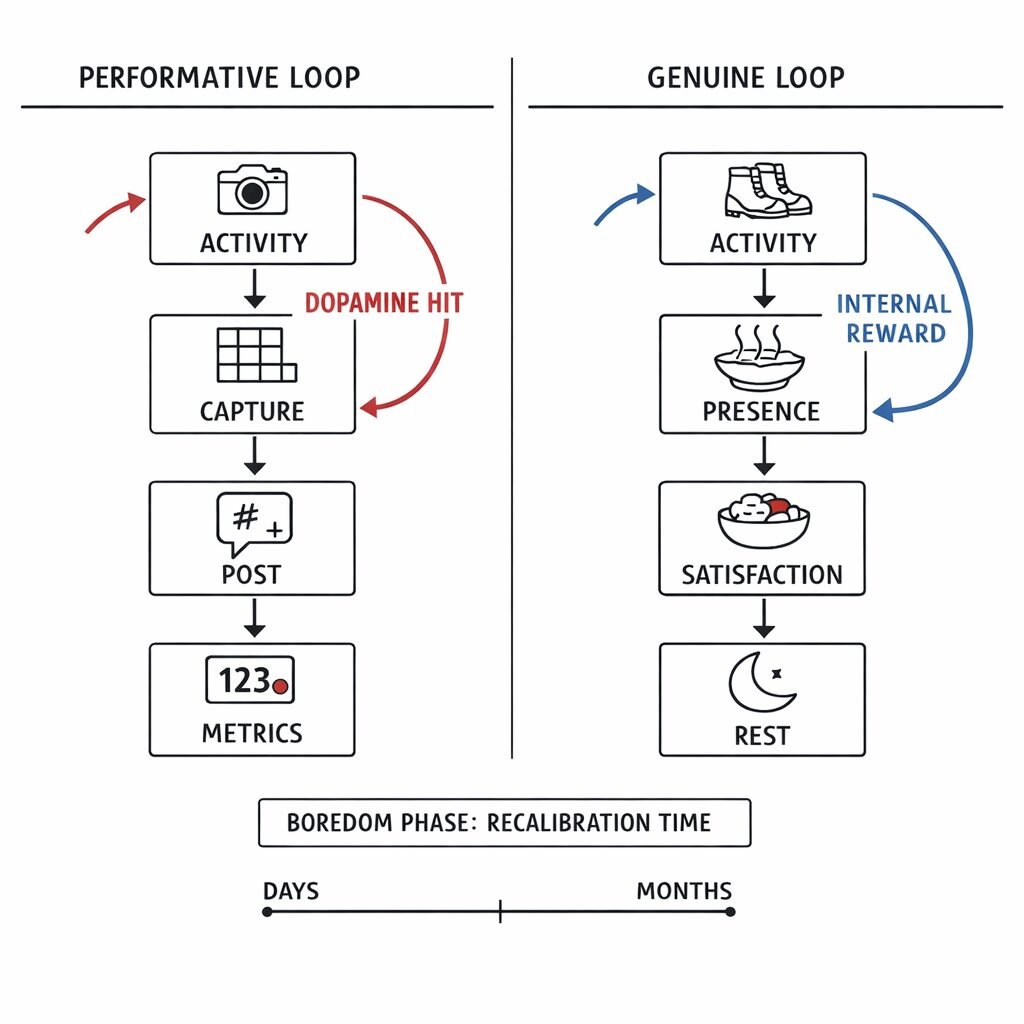
The cooking was never the reward. The validation was. The meal itself was just the price of admission to the real experience: being seen, acknowledged, approved of.
Reading books becomes the same story. Travel. Exercise. Art. Any activity that translated well to a grid was secretly optimized for that grid. When the grid disappears, you’re left holding an empty frame.
The Performative Self Isn’t a Character Flaw
Before beating yourself up about this, understand something: performing for social media isn’t shallow. It’s logical.
Social platforms are designed to make external validation feel like genuine satisfaction. The notification ping releases the same neurochemicals as real social connection. Your brain cannot tell the difference between someone genuinely appreciating your cooking and a stranger double-tapping a photo while half-watching Netflix.
So of course your brain built habits around capturing and sharing. It was getting rewarded for those behaviors thousands of times more frequently than it was rewarded for just enjoying the meal in silence.
You didn’t become performative because you’re vain. You became performative because the incentive structure was overwhelming.
Why Boredom Feels So Threatening Now
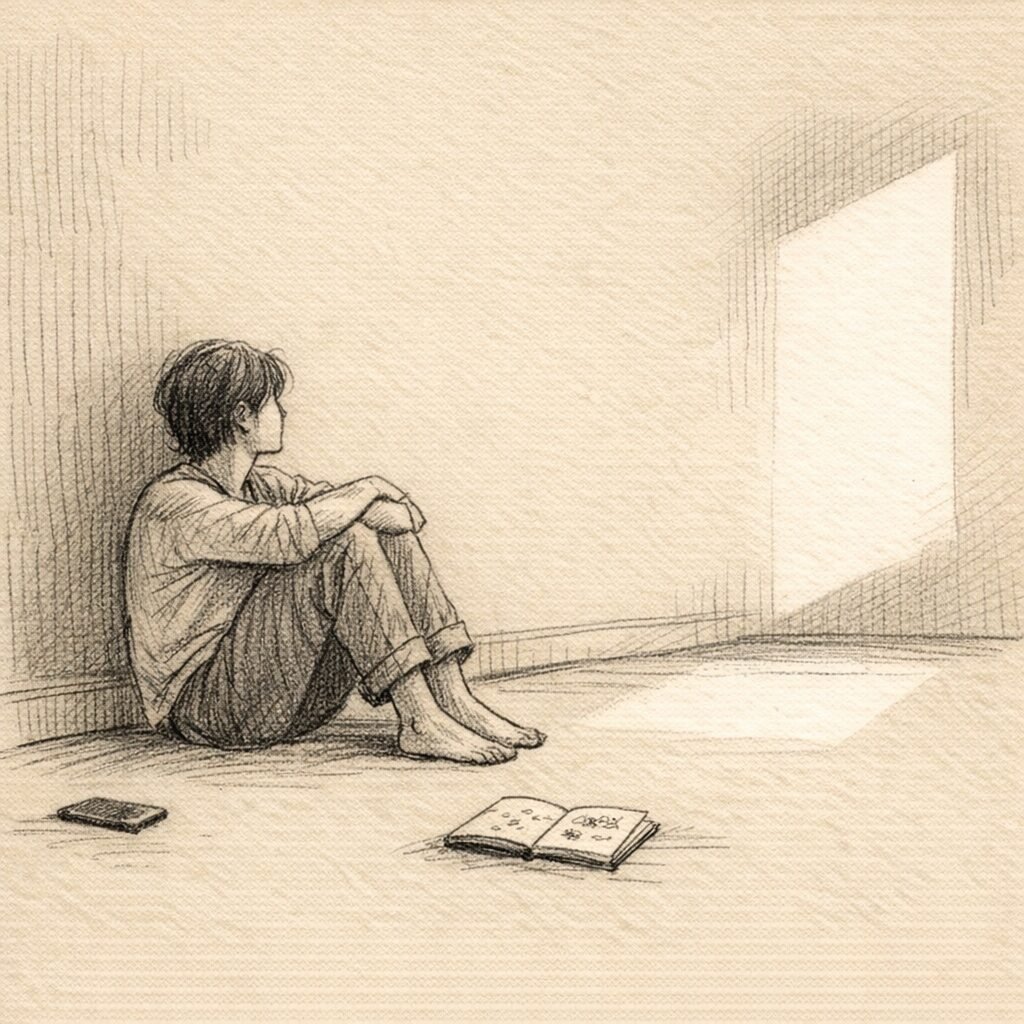
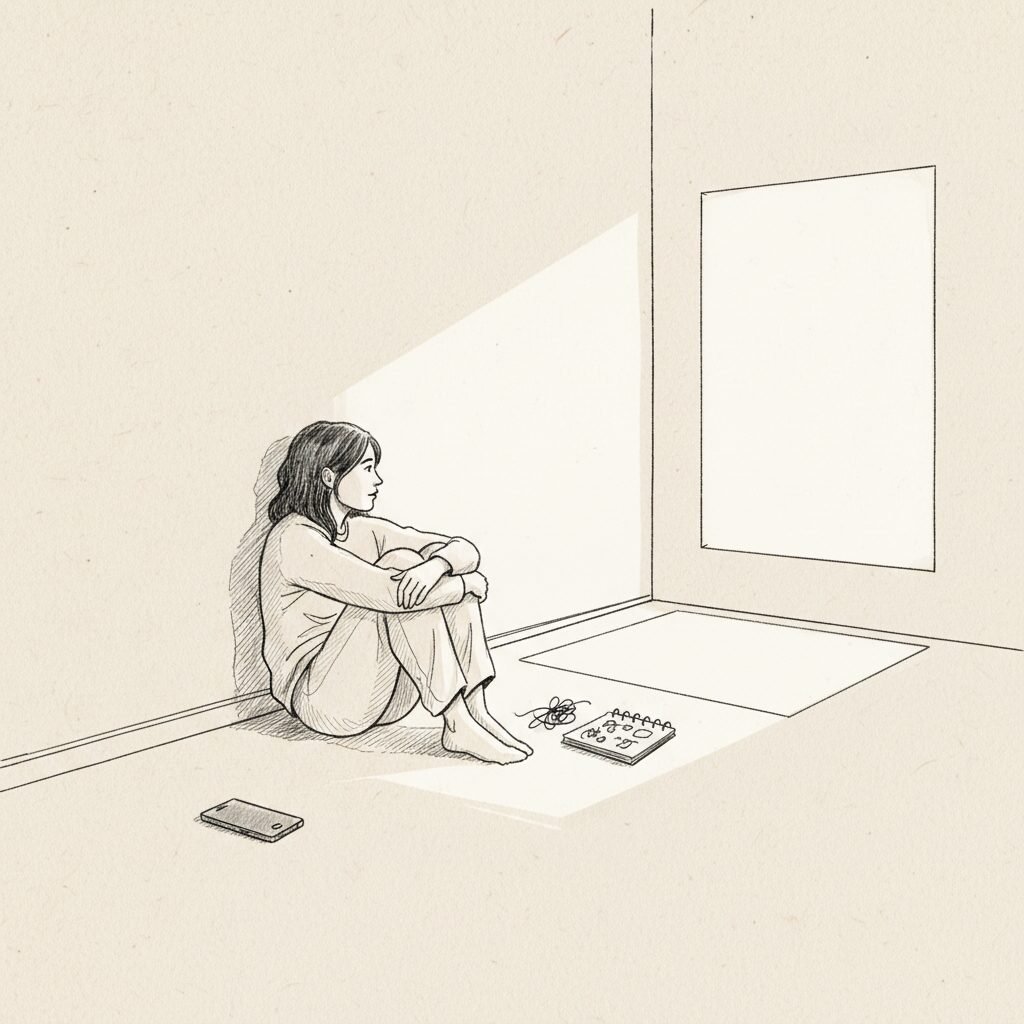
The first weeks after quitting often involve a lot of just sitting there. Staring at the wall. Feeling restless and guilty about feeling restless.
Most people interpret this as failure. They think they should be immediately pursuing meaningful hobbies, filling the void with self-improvement.
But boredom is the point.
Your attention has been systematically harvested for years. The part of your brain responsible for generating internal motivation has atrophied from disuse. It needs time to recover. Sitting with discomfort, without reaching for your phone, is the equivalent of physical therapy after a long illness.
Boredom is not the absence of something good. It’s the space where something new can eventually grow.
Finding What You Like When No One Is Watching
Here’s a question worth sitting with: What did you enjoy before you had a smartphone?
For many people, the answer involves activities that don’t photograph well. Walking without a destination. Tinkering with things. Conversations that go nowhere in particular. Doodling. Listening to music without doing anything else.
These activities feel “unproductive” because they don’t generate shareable artifacts. But that’s exactly what makes them sustainable. They reward you directly, not through an intermediary of likes and comments.
Some useful filters for discovering genuine interests:
– Would you still do this if you could never tell anyone about it?
– Does the activity itself feel good, or only the anticipation of showing it off?
– Can you do it badly without feeling like you’re wasting your time?
That last one matters. Performative hobbies require constant improvement because the content has to stay interesting. Genuine interests don’t. You can be mediocre at something forever if it genuinely engages you.
The Gap Between Intention and Impulse
Even after understanding all this, your fingers will still itch for the scroll. The brain pathways that formed over years don’t disappear because you’ve had an insight.
This is where environmental design becomes essential. Knowing something isn’t the same as doing it. The habitual behavior fires before your conscious mind can weigh in.
For people trying to use digital tools intentionally rather than quitting cold turkey, friction-based browser extensions like MonkeyBlocker can bridge this gap. The Impulse Check feature introduces a brief delay before sites load, giving your conscious mind time to catch up with the automatic habit. Rather than blocking platforms entirely, it creates a pause where you can ask yourself: “Is this what I actually want to do right now?”
Similarly, the Social Cleaner feature hides algorithmically recommended content while keeping posts from accounts you chose to follow. This addresses one of the core problems: platforms are designed to show you what will keep you scrolling, not what you came for. By removing the bait, you’re left with only the intentional connections, which are rarely addictive on their own.
These tools aren’t solutions. They’re supports. The real work is still internal.
Rebuilding Takes Longer Than Deleting
Quitting the app takes thirty seconds. Rebuilding a sense of genuine enjoyment can take months.
This timeline frustrates people. They expect immediate clarity, a sudden discovery of their “true passions.” Instead they get weeks of vague discomfort and a Netflix queue that feels hollow.
The discomfort is the process. Your brain is slowly recalibrating what counts as rewarding. It’s learning that experiences can be complete without documentation, that satisfaction doesn’t require witnesses.
When Sharing Isn’t Performing
None of this means you should never share anything again. Humans are social. Wanting to show someone your cooking isn’t inherently performative.
The difference is in the structure. Sharing a meal photo with three specific friends who care about food is different from posting it for 500 followers. Texting a book recommendation to someone who might actually read it is different from adding it to a story that disappears in 24 hours.
Sharing becomes performative when the audience is abstract and the feedback is quantified. It stays genuine when you know exactly who you’re talking to and why.
A Different Kind of Quiet
There’s a version of this story where someone deletes Instagram, sits with the discomfort for a few months, and slowly discovers they love building furniture. Or learning bird calls. Or just walking around the neighborhood noticing things.
These interests don’t announce themselves. They emerge from boredom, from following small curiosities without demanding they justify themselves.
The unsettling quiet after quitting isn’t the end of something. It’s the beginning of a longer, slower question: What would you do if no one ever knew you did it?
The answer might take a while. That’s fine. The question is worth living with.