
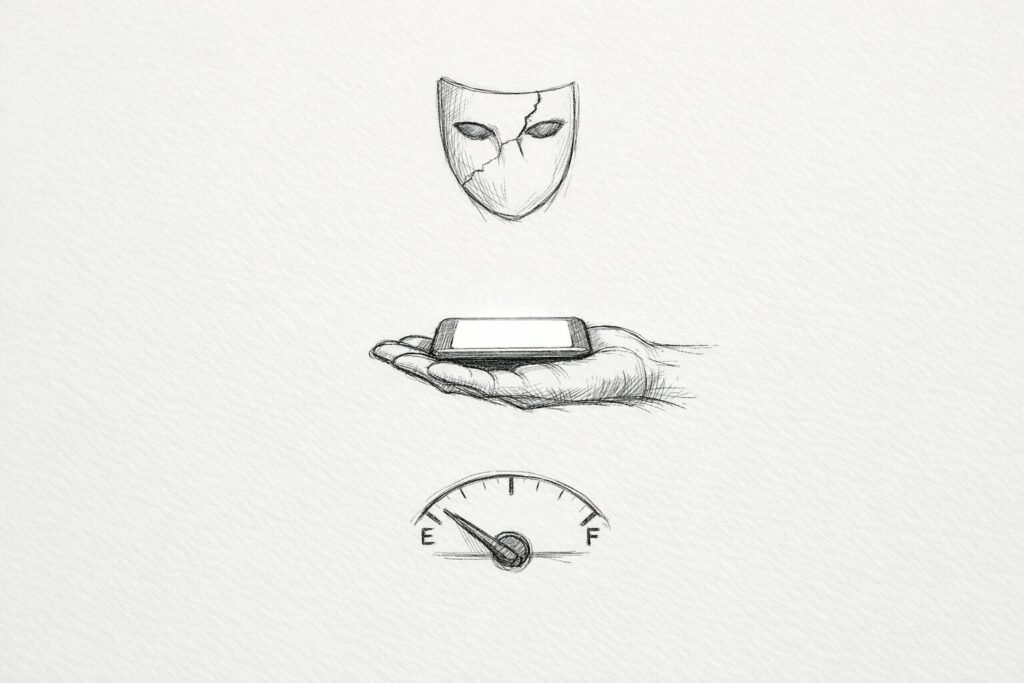
There’s a particular kind of exhaustion that sleep doesn’t fix. The kind where you wake up already tired, not from physical exertion, but from existing in a way that never quite fit. If scrolling through videos for hours has become less of a choice and more of a default state, you probably know this tiredness well.
What looks like laziness or lack of willpower is often something else entirely. Understanding the actual mechanics of getting stuck can reveal why common advice fails and what might work instead.
The Exhaustion Underneath the Scrolling
Most people assume phone overuse causes the fatigue. But for many, the relationship runs the other direction.
Years of functioning without knowing you had ADHD, autism, or both creates a specific kind of cumulative exhaustion that experts call burnout from masking. Every day spent forcing yourself into neurotypical patterns drains energy you didn’t know you were spending. When that catches up, the body and brain demand rest in whatever form they can get it.
Scrolling becomes the lowest-friction activity available. It asks nothing. It requires no sustained focus, no emotional investment, no risk of failure. For a nervous system that’s been running on fumes, that’s not weakness. That’s self-protection.
Why Picking Up Old Hobbies Feels Impossible
Here’s something most productivity advice gets wrong: it assumes the problem is motivation.
But motivation requires available mental resources. When those resources are depleted from years of unrecognized struggle, even activities you love feel like demands. Reading a book means tracking information across pages. Creating art means tolerating the gap between vision and outcome. Playing guitar means accepting you might sound bad for a while.
Avoiding things you care about isn’t laziness. It’s often a sign that failure has become too expensive when you’re already running at zero.
The phone doesn’t carry that risk. A YouTube video either entertains you or it doesn’t. There’s no investment, no stakes. Nothing to fail at.
The Problem With Willpower-Based Solutions
“Just put down your phone” assumes the choice is happening at a conscious level. For most people stuck in this pattern, it isn’t.
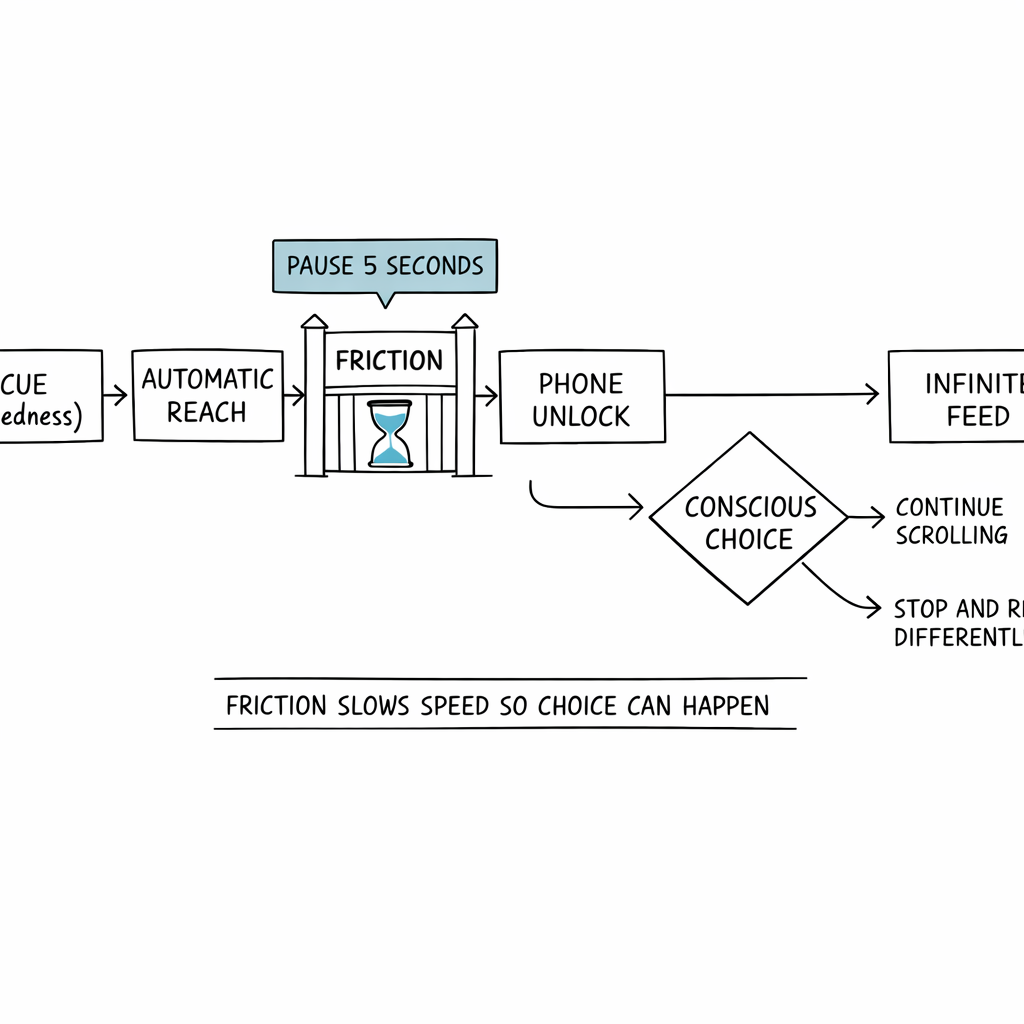
The hand reaches for the phone before the decision-making part of the brain gets involved. By the time you realize you’re scrolling, you’ve already been doing it for twenty minutes. This isn’t a character flaw. It’s how habit loops work, and they work faster than conscious thought.
That’s why trying harder rarely helps. The behavior bypasses the trying.
What does help is changing the environment so the automatic behavior gets interrupted. Not through punishment or shame, but through friction.
Small Barriers That Actually Work
The goal isn’t to make phone use impossible. It’s to make it slightly harder. Enough to create a gap where conscious choice can happen.
Some examples:
- Charging your phone in a different room overnight
- Logging out of apps so you have to sign in each time
- Using a separate alarm clock instead of your phone
- Removing apps from your home screen
Friction-based tools work because they target the actual problem: speed. Browser extensions like MonkeyBlocker apply this principle to computer use. The extension’s Impulse Check feature adds a brief pause before distracting sites load, giving your prefrontal cortex a few seconds to catch up with the automatic impulse. Its Scroll Stopper creates natural breaking points in infinite feeds, turning passive drift into moments that require active choice to continue.
These tools aren’t about restriction. They’re about slowing things down enough that you can participate in the decision your habit system was about to make without you.
Starting Smaller Than Feels Reasonable
One of the most counterintuitive findings in behavior change: starting too big almost guarantees failure.
If you’ve been in bed with your phone for a year, “getting your life back together” isn’t a first step. It’s the final destination. First steps look more like:
One walk around the block.
One day where you notice you’re scrolling before an hour has passed.
One 15-minute YouTube video instead of the endless feed.
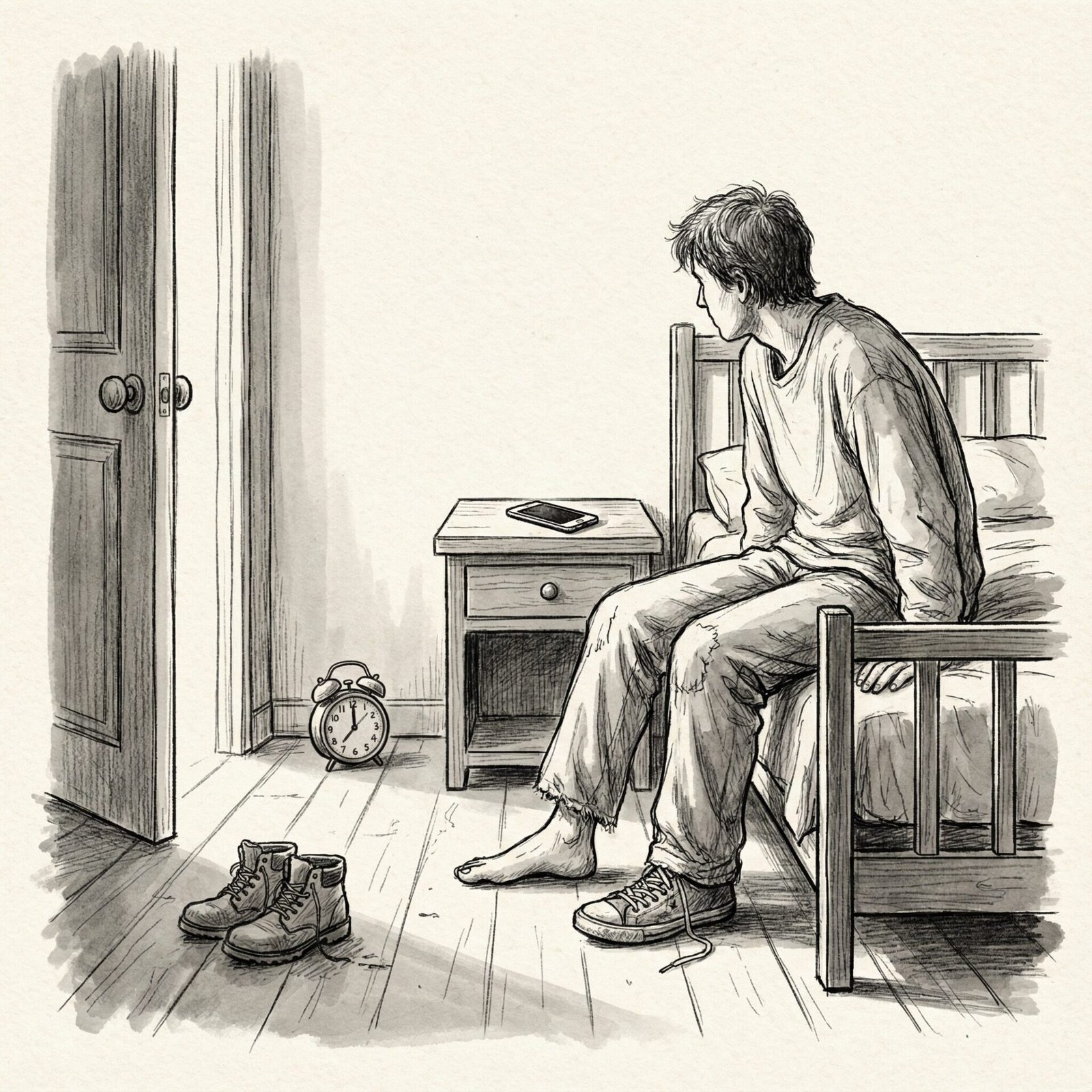
The incremental approach feels inadequate. But it works because it doesn’t demand more than your depleted system can give. Each tiny success rebuilds the capacity for the next one.
What Recovery Actually Looks Like
Recovery from burnout isn’t linear. It’s not a steady climb back to how things were before.
For one thing, “before” may have been unsustainable. If you were forcing yourself into patterns that didn’t fit your brain, returning to that isn’t the goal.
The more realistic aim is building something that works with how you actually function. That might mean lower expectations in some areas and discovering capacities you didn’t know you had in others.
Some people find that going outside without any technology, even for fifteen minutes, begins to reset what their nervous system considers normal stimulation. Others discover audiobooks let them engage with stories in a way print never did. Some notice that doing tasks for someone else unlocks energy they can’t access for themselves.
There’s no universal answer. There’s only finding what works for your particular brain.
The Thing No One Tells You
Getting diagnosed with ADHD or autism in adulthood often brings a strange mix of relief and grief. Relief at finally having an explanation. Grief for all the years spent blaming yourself for something that was never a character flaw.
That grief is part of the process. So is the anger, when people minimize what you’ve been through. So is the fear that maybe medication won’t help, or that you’re somehow beyond fixing.
You’re not beyond fixing. But you might need to redefine what “fixed” means. It probably doesn’t look like becoming someone who never struggles with attention or energy or motivation. It might look like building a life that accommodates the brain you have instead of demanding you perform as if you have a different one.
The phone in your hand isn’t the enemy. It’s a symptom of a system under strain, doing its best to survive. The path forward starts with recognizing that, not with shame.